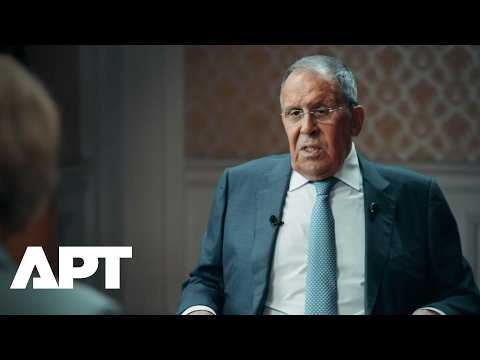
Russian Foreign Minister Sergei Lavrov has delivered a series of blunt and controversial messages on Ukraine, Britain and the West, saying “Ukraine’s end is not a happy one.” Read the full transcript of Lavrov’s interview below.
In 1776, Adam Smith published An Inquiry into the Nature and Causes of the Wealth of Nations. The date is interesting for reasons that go far beyond the American Revolution. Smith stood almost exactly at the midpoint of the extraordinary period of Western global ascendancy that began with the Age of Exploration. The Magellan–Elcano expedition completed the first circumnavigation of the earth in 1522, 254 years before Smith published his book. We are now, in 2026, 250 years on the other side of Smith.
Smith therefore stood roughly halfway between Magellan and ourselves.
From his vantage point, the global expansion of European commerce appeared to be one of the most consequential developments in human history. Smith believed commerce could enrich nations, disseminate knowledge and connect distant peoples in ways that ultimately benefited humanity. Yet he was remarkably unsentimental about what European superiority had actually produced. Europeans possessed such overwhelming advantages in military force and technology that they had been able, in Smith’s words, to commit “every sort of injustice” against weaker peoples with impunity. He then imagined something extraordinary: the peoples Europeans had dominated would eventually grow stronger, Europe might grow weaker, and the dissemination of knowledge and technology through the very process of global commerce would gradually produce an “equality of courage and force.”
That prediction is worth keeping in mind while listening to a recent interview with Russian Foreign Minister Sergei Lavrov.
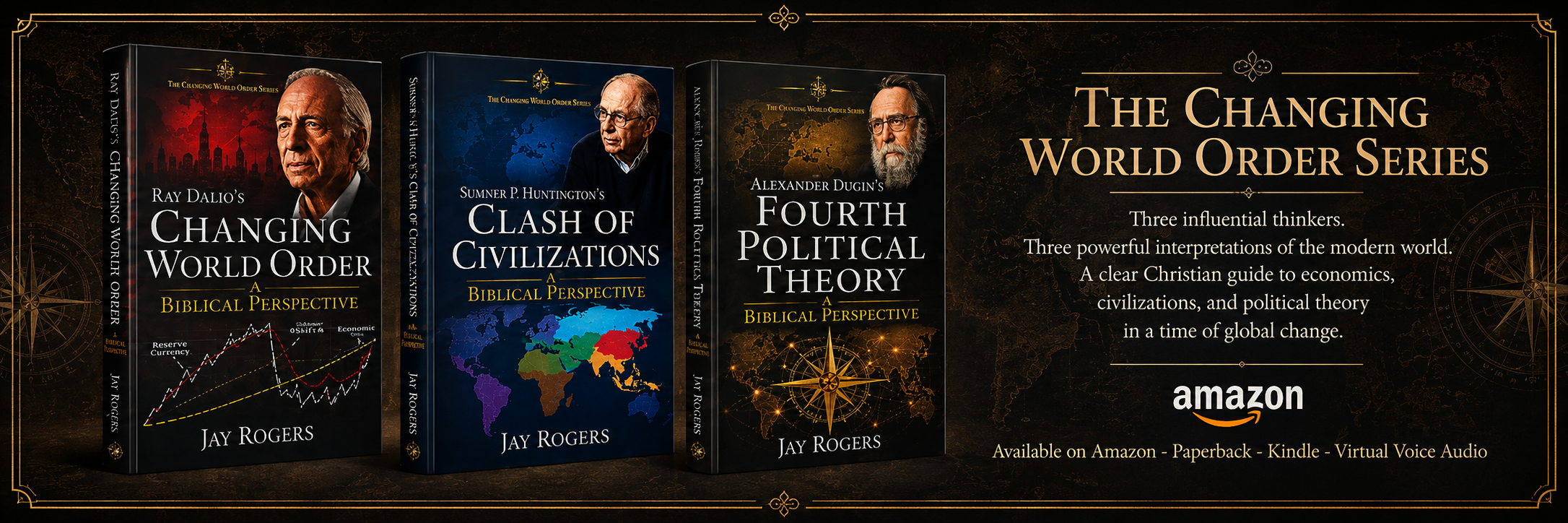
It also provides the historical frame for my three–volume Changing World Order series. Ray Dalio describes the economic cycles by which great powers rise through productivity, trade, technological innovation, reserve currencies and military strength, then decline through debt, internal disorder and overextension. Samuel Huntington examines the corresponding shift in civilizations and argues that modernization does not necessarily mean Westernization; as China, India, Russia, the Islamic world and the Global South grow stronger, they become more culturally confident rather than less. Aleksandr Dugin pushes the argument into political philosophy and asks what comes after Western Liberal unipolarity. I disagree with significant parts of all three thinkers, but together they describe a development that is increasingly difficult to deny: the world is moving away from a single Western center of power and toward a genuinely multipolar order. In my Dugin volume, I emphasize that this need not mean exchanging American hegemony for Russian or Chinese hegemony. The goal should be “a truly multipolar world.”
Lavrov’s interview should be heard within that larger argument. Much of what he says is obviously polemical. He is the foreign minister of Russia during a war and is presenting Russia’s interpretation of events. His sweeping claim that the West has always sought to weaken Russia in order to exploit it is too simple to account for several centuries of complicated history. His assertion that the West has never prospered except through exploitation is even harder to defend.
But dismissing the entire interview as Russian propaganda would be equally simplistic because Lavrov mixes his political opinions with a number of historical facts that are uncomfortable for Western audiences. Those facts deserve to be separated from his rhetoric and examined on their own merits.
Russia’s Historical Memory Is Not Imaginary
Lavrov begins with the Russian perception that Western powers have repeatedly sought to contain, weaken or dismember Russia. I would state the historical argument somewhat differently. It is difficult to prove that France, Britain, Germany, the United States and other powers were all motivated by the same centuries–long plan to destroy Russia. Their motives varied enormously.
What cannot reasonably be disputed is the repeated experience of foreign invasion and military intervention.
Napoleon invaded the Russian Empire in 1812 with a huge multinational European army. During the Crimean War, Britain and France deliberately carried the war into Crimea and attacked Sevastopol because they wanted Russian naval power in the Black Sea crippled. Contemporary accounts explicitly describe British fears of the possibility of Russian power extending toward the Mediterranean.
Germany fought Russia during World War I. After the Bolshevik Revolution, British, French, American, Japanese and other foreign troops intervened inside Russia during the Civil War. This is not Soviet or Russian mythology. The official U.S. State Department historical record describes the Allied occupation of Archangel, the arrival of American troops in September 1918, and the continued presence of American and Allied forces after the armistice ending World War I.
Then came the catastrophe that dominates Russian historical memory to this day. Nazi Germany invaded the Soviet Union on June 22, 1941. This was not simply another struggle over borders. Nazi policy contemplated the destruction of the Soviet state and the seizure of enormous territories as Lebensraum. More than three million German troops, joined by forces from allied countries, participated in the initial invasion, and German occupation policies contributed to the deaths of about 27 million Soviet civilians, soldiers and prisoners of war.
Americans ought to be capable of holding two facts in their minds simultaneously. Russia may have behaved aggressively toward its neighbors while Russians can also possess a perfectly rational historical fear of invasion from the West.
That background matters when Western politicians speak casually about “weakening Russia,” destroying the Russian economy, engineering regime change or breaking the Russian Federation into smaller states. We hear these statements as policy options from numerous Western officials, think–tanks and media pundits. Russians hear them through a historical memory that includes Napoleon, Crimea, foreign armies during their Civil War, and Hitler’s attempted genocide of the Slavic people.
The West Has Repeatedly Tried to Contain Russian Power
Lavrov’s claim becomes more defensible if we replace the idea that the West has always tried to prevent Russia from becoming a great power with the more traditional concept of great–power containment.
Russia has been a great power for centuries. Other powers have repeatedly tried to stop it when Russian expansion threatened what they considered the existing balance.
The Crimean War is a good example precisely because neither side fits comfortably into a morality play. Russia was applying aggressive pressure against the Ottoman Empire. Britain and France had legitimate strategic concerns. Yet having achieved their immediate defensive objective, they still decided that Russian naval strength at Sevastopol had to be destroyed because allowing Russia to emerge as the dominant power in the Black Sea threatened their interests.
This is how great powers behave.
One of the recurring problems I identify in my Changing World Order books is that Western policymakers often regard American security interests as self–evidently legitimate even when they extend thousands of miles from our borders, while Russian or Chinese claims to security interests along their own borders are treated as inherently illegitimate. This is not a rule that other great powers are going to accept indefinitely.
Huntington anticipated precisely this problem. In my treatment of his proposed relationship between Russia and the West, I summarize his argument that Russia would have to accept the NATO enlargement that had already occurred, while the West would have to recognize Russia as the core state of Slavic Orthodox civilization, acknowledge genuine Russian security concerns and treat Moscow as an equal participant in resolving conflicts along civilizational fault lines.
That would not have given Russia a veto over every neighboring country. It would have required both sides to recognize that peace among nuclear great powers is sometimes built through accommodation rather than the unconditional triumph of one side.
There Was Another Path After the Cold War
Another of Lavrov’s points deserves more attention because it contradicts the idea that Russia and the West were destined to become enemies. He remembers the period when Russia had extensive institutional relationships with Europe, including frequent summits, ministerial cooperation and negotiations toward visa–free travel. The transcript recalls Russia looking both east and west for “opportunities for mutually beneficial relations.”
Lavrov naturally tells the story entirely from Moscow’s point of view, but the underlying history is important. During the 1990s and early 2000s, there really was a possibility that Russia might become integrated into a broader European political and economic structure. Russia and the United States cooperated on some important security questions. European trade with Russia expanded dramatically. Russian elites invested in Europe, Russians traveled throughout Europe, and Western corporations entered Russia.
The collapse of that relationship was not foreordained.
This brings us to Ukraine. Lavrov complains that Brussels increasingly treated Ukraine, Moldova and Georgia according to an “either–or logic.” Either they moved toward the West or they remained oriented toward Moscow. Russia eventually played precisely the same game from its own side, applying pressure to keep Ukraine within its economic and geopolitical sphere.
My criticism is therefore not that Europe made Ukraine choose while Russia magnanimously offered neutrality. Both sides increasingly forced the choice.
The tragedy is that Ukraine was almost uniquely unsuited to becoming the rope in a geopolitical tug–of–war. Huntington had described exactly this type of country as a “cleft” or “torn” state, divided historically, linguistically, culturally and religiously between civilizations. The wiser policy would have been to turn Ukraine into a bridge between Russia and Europe rather than the front line between them.
Instead, it became the front line.
The 2022 Istanbul Negotiations Cannot Simply Be Dismissed
This is where I am inclined to give Lavrov’s argument more weight than most Western commentators do.
For years, the claim that a possible settlement existed in the spring of 2022 and was discouraged by the West was dismissed as Russian propaganda. Yet some of the strongest evidence now comes from Ukrainian negotiators themselves.
Ukraine’s proposals at Istanbul on March 29 contemplated permanent neutrality, no foreign military bases, no membership in military blocs, international security guarantees, continued movement toward European Union membership, and a fifteen–year process of negotiations over Crimea rather than attempting to resolve the dispute militarily. The document even contemplated a future meeting between Putin and Zelenskyy to sign an agreement or resolve the issues that remained.
Davyd Arakhamia, who headed the Ukrainian negotiating delegation, later acknowledged that neutrality was the essential Russian demand. According to his account, Russia was prepared to end the war if Ukraine renounced NATO membership. Arakhamia also recalled what happened after the Istanbul negotiations: Boris Johnson came to Kyiv and said, in Arakhamia’s words, that “we would not sign anything with them at all” and should continue fighting.
Oleksandr Chalyi, another Ukrainian negotiator and a former deputy foreign minister, later described what the negotiators had achieved as a “very real compromise” and said they had been very close in April 2022 to ending the war through a peaceful settlement.
I think it is fair, therefore, to say that Johnson helped quash the Istanbul negotiating process. What I would not claim is that a final, completed treaty had already been signed and was merely waiting for Zelenskyy to put his name on it. Important questions remained unresolved, Arakhamia himself has said the Ukrainian side profoundly distrusted Russia, and the Ukrainians wanted security guarantees that Western powers were reluctant to provide.
But that qualification should not be turned into an excuse for pretending nothing substantial existed. Ukraine had proposed a detailed framework. Ukrainian negotiators believed a real compromise had been reached. The chief Ukrainian negotiator says Johnson arrived immediately afterward with a message that the West would not make such an agreement with Russia and that Ukraine should continue fighting.
Hawkish neoconservatives might argue that Johnson gave Ukraine good advice. Perhaps Western leaders sincerely believed Russia could be defeated militarily on terms far more favorable to Ukraine. The real question is whether that judgment was correct.
We Have Helped Build the Russia–China Partnership We Claim to Fear
Lavrov next turns east. He points to Russian cooperation with China in nuclear technology, space, artificial intelligence and other fields and presents the relationship as an increasingly comprehensive strategic partnership.
Again, Lavrov’s presentation is self–serving, but the geopolitical problem for the West is real. Russia and China were not destined to become close strategic partners. They share one of the longest borders in the world, fought deadly border clashes during the Cold War and have many potentially competing interests in Central Asia and elsewhere.
During the Nixon era, one of his touted achievements of American diplomacy was exploiting the Sino–Soviet split rather than driving those two enormous Eurasian powers together.
We have increasingly accomplished the opposite.
Sanctions against Russia accelerated Russian trade with China. Western financial pressure encouraged Russia and other countries to construct alternatives to Western–controlled payment and banking systems. Attempts to isolate Moscow strengthened its incentives to deepen relations not only with China but with India, Iran and numerous countries throughout the Global South.
As I wrote in my Huntington volume, pressure on other nations to isolate Russia has “ironically not only pushed China and Russia together, but also the majority of the world toward a trade alliance through BRICS+.”
This does not mean BRICS is about to become an anti–Western NATO. That misunderstands the attraction. India does not want Chinese domination. Brazil does not want Russian domination. Many BRICS members still want enormous amounts of trade with Europe and the United States.
What they want is room to maneuver.
That is the essence of multipolarity. A country can trade with Washington, Beijing, Moscow, Delhi, Brazil and the European Union without being required to enter one geopolitical camp.
Is the West Afraid of Fair Competition?
Near the end of the interview, Lavrov frames the underlying struggle as a contest over what kind of world is emerging. He portrays BRICS as favoring an open system of competition and accuses the West of being afraid of competing on equal terms.
His claim is overstated. Russia and China protect favored industries, use political influence to advance economic interests and behave like great powers when dealing with weaker neighbors. There is no reason to romanticize them.
Yet Lavrov’s charge should make us uncomfortable because the Western system has never operated solely through free competition either.
For roughly five centuries, Western nations enjoyed technological, financial and military advantages that gave them enormous leverage over the rest of the world. The Portuguese and Spanish empires were followed by the Dutch, French and British. Britain dominated through its navy, trade, finance and empire. The United States inherited a different form of global primacy through military power, international financial institutions, the dollar reserve system and an unparalleled ability to apply economic sanctions.
As I wrote in the Dalio book, after the Cold War the United States increasingly behaved as though the unipolar moment were permanent. The collapse of the Soviet Union encouraged both neoconservatives and neoliberals to imagine that every nation would eventually have little choice but to adopt some version of the Western Liberal political and economic system. Yet the world’s demographic and economic center has steadily moved toward Asia and the Global South.
This is where we should return to Adam Smith.
Adam Smith’s Warning — and His Hope
Smith was writing in 1776, almost exactly 250 years after the Magellan–Elcano voyage and almost exactly 250 years before our own time. He could already see both sides of the global commercial revolution. Commerce united distant peoples and spread knowledge, technology and prosperity. At the same time, European superiority in military force had allowed Europeans to behave unjustly toward people who could not resist them.
Here is the entire passage as I quote it in Ray Dalio’s Changing World Order in Biblical Perspective:
The discovery of America, and that of a passage to the East Indies by the Cape of Good Hope, are the two greatest and most important events recorded in the history of mankind. Their consequences have already been very great; but, in the short period of between two and three centuries which has elapsed since these discoveries were made, it is impossible that the whole extent of their consequences can have been seen. What benefits or what misfortunes to mankind may hereafter result from those great events, no human wisdom can foresee. By uniting, in some measure, the most distant parts of the world, by enabling them to relieve one another’s wants, to increase one another’s enjoyments, and to encourage one another’s industry, their general tendency would seem to be beneficial.
To the natives however, both of the East and West Indies, all the commercial benefits which can have resulted from those events have been sunk and lost in the dreadful misfortunes which they have occasioned. These misfortunes, however, seem to have arisen rather from accident than from anything in the nature of those events themselves. At the particular time when these discoveries were made, the superiority of force happened to be so great on the side of the Europeans that they were enabled to commit with impunity every sort of injustice in those remote countries.
Hereafter, perhaps, the natives of those countries may grow stronger, or those of Europe may grow weaker, and the inhabitants of all the different quarters of the world may arrive at that equality of courage and force which, by inspiring mutual fear, can alone overawe the injustice of independent nations into some sort of respect for the rights of one another. But nothing seems more likely to establish this equality of force than that mutual communication of knowledge and of all sorts of improvements which an extensive commerce from all countries to all countries naturally, or rather necessarily, carries along with it.
Smith did not use our modern language of reparations, restitution or decolonization. We should not put words into his mouth. But he did something perhaps more profound. He recognized that the peoples on the receiving end of European expansion had suffered “dreadful misfortunes” and “every sort of injustice,” and he predicted that the balance of power would eventually change as those peoples acquired the knowledge, technology and economic strength that Europe once monopolized.
That helps explain why demands for reparations, restitution of cultural treasures, control over natural resources and relief from Western financial institutions resonate so strongly throughout Africa, Asia and Latin America today. One need not agree with every demand to understand where it comes from. Nations have historical memories just as individuals do, and people who believe their ancestors were exploited do not necessarily forget the experience merely because several generations have passed.
This is the part of the Changing World Order that worries me most. The danger is not simply that the West is becoming relatively less powerful. Relative power shifts have occurred throughout history. The danger is that our leaders may remain psychologically committed to a unipolar system after the material foundations that made it possible have disappeared.
China cannot simply be bullied into submission. Neither can Russia or India. Increasingly, neither can the emerging nations of Africa, Latin America, Southeast Asia and the Middle East. They have alternative markets, alternative financial relationships, alternative sources of weapons and technology, and increasingly the confidence to tell Washington, London, Paris or Brussels that they disagree.
We should not respond to this transition by despising our own civilization. Western civilization has given the world extraordinary gifts: constitutional government, scientific institutions, tremendous technological advances, traditions of individual liberty, global commerce and, above all from my own Christian perspective, centuries of missionary expansion that helped carry the Gospel throughout the earth. Other civilizations also have sins in their histories, including conquest, slavery and empire. There is no innocent civilization waiting somewhere in the Global South to inherit the earth from uniquely wicked Europeans.
But neither should gratitude for what the West accomplished become an excuse for historical amnesia or imperial hubris.
The question we in the West ought to be asking is larger than whether Sergei Lavrov has accurately described every grievance Russia has against us. Smith stood almost exactly at the 250–year midpoint of the Western age of global commerce and power. Looking backward, he saw what European technological superiority had allowed us to accomplish, for good and for evil. Looking forward, he imagined that commerce itself would spread knowledge until the peoples Europe had once dominated became stronger, Europe became relatively weaker, and no civilization could commit injustice against another with the same degree of impunity.
Are we now living at the end of the era Adam Smith foresaw?
If so, the question is not how the West can somehow force seven billion people back into a world order built during the centuries when our comparative power was overwhelming. It is how we should live in a world in which other great civilizations possess enough economic, technological and military strength to demand that they be treated as equals.
For Christians especially, the answer ought to involve more humility than hubris. We can defend what is best in our civilization without assuming that God appointed the United States or Western Europe to govern the earth. We can remain militarily strong without treating every rising power as an enemy that must be contained before it becomes too strong. We can promote liberty through example rather than assuming that societies with different histories and cultures must be coerced into our political model. We can trade with other nations without assuming that access to the Western financial system gives us the perpetual right to dictate their foreign policy.
Smith believed that an “equality of courage and force” might finally compel independent nations to show some respect for one another’s rights. Perhaps that is not the end of Western civilization at all.
Perhaps it is simply the end of the period in which the West could expect to dominate the world.
Read the full transcript of Lavrov’s interview below:
The West has always wanted to weaken our country, the Russian Empire and the Soviet Union, just as it now wants to weaken or even dismember Russia so that it can exploit our resources.
But now we can see that the West has miscalculated. There can be no artificial preservation of its dominance, which has lasted for over 500 years. It must defend its positions in a fair struggle, and this is something it is incapable of doing.
Never in its entire history has the West lived, survived, or prospered fairly without exploiting others. The West’s loss of its objective ability to control everything has led it to attempt to dominate through completely underhanded methods, sanctions, or even direct intervention, going as far as military intervention.
They are now simply clinging to their last remaining opportunities to preserve their dominance. So when a wounded beast — historically speaking, of course, the West, and particularly Europe, is a very badly wounded beast — it becomes far more dangerous.
Firstly, we never fell out with the West. We never did anything to undermine our relations with the West.
We had an extensive system: two summits a year, ministerial meetings starting with the foreign ministries and involving a couple of dozen sectoral ministries as well. The visa–free regime was practically ready.
Even in better times, back in 2013, Europe was dragging its feet over approving it because they were whispering in our ears in the hallways: “Excuse us. Yes, we have agreed on everything with you, but politically speaking, we cannot introduce a visa–free regime with Russia before we do so with Moldova, Georgia, and Ukraine.”
That is the price these people demand, with the fact that they are, of course, guided by ideological considerations, by a desire to continue, as it were, to control everything and pull you towards them on the basis of an either–or logic.
It is no coincidence that the eagle on our coat of arms has two heads facing both west and east. We watch keenly in both directions to ensure, firstly, that there are no threats and no attempts to harm us in either direction.
And secondly, we keep a watchful eye out for opportunities for mutually beneficial relations. At this stage, of course, all these opportunities lie in the East.
China’s nuclear industry was established with our decisive contribution. We have joint projects in space and in other high–tech fields. We are working together on artificial intelligence. We have no technological secrets from one another with China.
This also proves the equal and mutually beneficial nature of our strategic comprehensive partnership, as set out in our joint documents. So we are the two largest countries in the world living as good neighbors.
Everything is unfolding on the real front line there. Our troops are making steady, unrelenting progress towards their designated objectives.
What you are hearing primarily from Kiev, from other capitals, from Washington, is all being done with a single aim: to buy some more time so that the crumbling Kiev regime can somehow be propped up again for a while.
They are openly saying that they have no means of defending themselves against Russian missiles. Europe realizes that now. If the Americans were to suddenly return to their original proposals, as was the case in Anchorage, Europe was simply scared to death back then.
They immediately rushed to lobby Trump to prevent him from reaffirming his own initiatives, which Putin had accepted.
And so, at the NATO summit in June, Macron proudly declared, “That’s it. We’ve buried Anchorage. Trump is back with us. America is back with us. And we’re all united against Russia.”
Well, have it your way. If Western diplomacy boils down to holding back countries that put forward reasonable, balanced, and compromise–based initiatives, then so be it.
If that’s the case, then we will achieve our goals not at the negotiating table, which would be preferable for us, as Anchorage proved, but on the battlefield, as the president has repeatedly stated.
So if there are no visible signs that negotiations are taking place in a calm atmosphere, that does not mean that such negotiations are actually taking place. They are not.
The decline in the stature of Western politicians and diplomats has been evident for several years now. I would say it probably began at the start of the 21st century, when prominent figures such as Chirac, Schroeder, and several others left office.
This particular class of European elites began to lose their stature to a large extent. This is because charismatic figures have become unwanted, while anyone who holds different views is simply suppressed.
Now, according to the information we are receiving, the European Union is beginning to prepare special observers who will secretly monitor how our elections are conducted.
They want dull and compliant individuals. Not to mention that there are hardly any charismatic politicians in Britain these days.
Given that, if I’m not mistaken, they are already on their eighth or ninth prime minister whom nobody actually voted for. I feel sorry for Britain because it said itself that it would — Prime Minister Burnham said that they would stand with Ukraine until the end.
Well, given that Ukraine’s end is not a happy one, I feel sorry for Britain.
We warned that Ukrainian terrorist attacks on civilian targets in Russia, including oil refineries, would provoke a response that would be far harsher for Ukraine. And that is what is happening now.
Officials there are already starting to say that they won’t make it through the winter, that they need to do something about it.
So they have proposed and persuaded the Turks to introduce a Russian–Ukrainian moratorium on attacks against ships carrying civilian goods in the Black Sea.
It’s impossible to monitor. We already went through this three years ago when we adopted the Black Sea Initiative mediated by Mr. Guterres, the UN Secretary–General.
But the Ukrainians were constantly abusing it because they were transporting weapons on civilian vessels every now and then.
Everything that had been promised to us under this initiative, namely unhindered access to world markets, was blocked by Europe, which is why we abandoned the whole thing.
Now they are trying to revive it again.
This is completely unacceptable and utterly unrealistic. We had warned them many times. There were more than enough opportunities to make peace.
It was April 2022 when the Ukrainians proposed a settlement during the talks in Istanbul. Boris Johnson categorically forbade them from doing so.
The other day he said somewhere that he didn’t forbid it, but told them to decide for themselves and that, if they chose to fight, they would continue to support them.
He is lying.
There was an article in an American outlet, The American Conservative, a very interesting piece, which over two pages details how the West prevented Ukraine from signing the peace initiatives it had itself proposed and which we had accepted.
So they should keep quiet for now with their new ideas.
When it comes to European arrogance, they’re already so cocky that they give the impression that whatever they decide will simply happen. They say that they must be ready to go to war against Russia by the year 2030.
There is currently an underlying struggle over what this world will look like.
Either it will be an open, free world with no barriers whatsoever — neither in sport nor in education, where you can study wherever you wish, nor in culture, where there will be no artificial restrictions on developing economic and other aspects of life.
BRICS stands for it to be open to everyone and for fair competition to prevail.
But the West is afraid of fair competition.