
Eschatology is the study of the last things (from the Greek: eskatos or “last things”). The last things, according to the Bible, are the fulfillment of the Great Commission, the Second Coming of the Lord Jesus Christ, the Resurrection of the Living and the Dead, and the Final Judgment.
According to Acts 1:6-8, Jesus Christ gave some last words to His disciples specifically forbidding them to inquire into the study of the end times. They asked Him: “Lord, will you at this time restore the kingdom to Jerusalem?” Jesus rebuked them saying: “It is not for you to know the times or seasons which the Father has put in His own authority.”
Instead, Christ commanded to be concerned with fulfilling the Great Commission: “But you shall receive power when the Holy Spirit has come upon you; and you shall be witnesses to Me in Jerusalem, and in all Judea and Samaria, and to the ends of the earth.”
It is important to remember that eschatology is the study of last things not the end times. In our day, Christians seem more fascinated than ever with this forbidden study “end times.” Rather than focusing helping to fulfill the Great Commission, one of the God-ordained “last things,” they concentrate instead on interpreting the daily news in light of Scripture.
Earthquakes, wars and rumors of wars, famines in Africa, pestilence in various places, the spread of false religions, signs in the heavens, growing tensions in the Middle East. All these things point to the time when the world has entered the end times. Right?
Wrong!
“See that you are not troubled; for all these things must come to pass, but the end is not yet. For nation will rise against nation and kingdom against kingdom. And there will be famines, pestilences, and earthquakes in various places. All these things are the beginning of sorrows” (Mat. 24:6-8 italics mine).
Many Christians in our day look in the daily news for an increase of earthquakes, wars, famines, pestilence, false religions, signs in the heavens and tensions in the Middle East over the nation of Israel. They interpret Christ’s admonition to the disciples to mean exactly the opposite of what it literally says.
The fact that “all these things” are occurring in our day has nothing to do with Matthew 24. They have nothing to do with the end times, In fact, when Jesus said, “all these things must come to pass” he was speaking specifically of events in the first century.
“The disciples” Jesus is speaking to here may have been more than only the Twelve. Some of these lived past the year 70 when the Jewish Temple was destroyed. The Jewish historian Josephus in his book, Wars of the Jews, has some fascinating records of providentially ordained earthquakes, natural calamities and wars which occurred around the time of the siege of Jerusalem (67-70).
Jesus implies in this Matthew 24, that at least some of His disciples would live to see “these things” (v. 6). For example, He says, “You will hear …” (v. 6); “Then they will deliver you up …” (v. 9); “Therefore when you see …” (v. 15).

The Three Questions
In Matthew 24:3, the disciples were asking three questions of Jesus:
1. When will these things be? (“These things” refer to the destruction of Jerusalem and Herod’s Temple.)
2. What will be the sign of your coming?
3. And the end of the age?
At the time of Christ’s coming, messianic expectations were at a fever pitch. Many first century Jews understood that Daniel 9 pointed to their century as the time for the coming of the Messiah. But most, including some of Jesus’ disciples, expected a political revolutionary and a king like David, who would defeat the Roman Empire and restore the kingdom of Israel from Jerusalem. Jesus’ disciples understood that their Lord must first be crucified and rise from the dead. His triumphal entry into Jerusalem was for the purpose of His suffering and death, not for setting up an earthly kingdom.
“And Jesus went out, and departed from the temple: and his disciples came to him for to shew him the buildings of the temple. And Jesus said unto them, See ye not all these things? verily I say unto you, There shall not be left here one stone upon another, that shall not be thrown down” (Mat. 24:1,2).
When Jesus spoke of the Temple’s destruction, this must have startled His disciples. How did the destruction of the Temple relate to the mission of Christ? Was this somehow related to the prophesied coming of Christ as a King over the nations and to the end of the world?
The disciples believed that they were asking one question, but Jesus treats all three separately and mainly in order in Matthew 24. The Jews of that day (especially the Essenes and the Pharisees) held to a premillennial eschatology (later condemned by the Church as the heresy of chiliasm) which explained that the Messiah would soon come to set up an earthly kingdom; He would destroy the Temple; and rule the nations with a rod of iron from Jerusalem. Jesus’ disciples erroneously believed that Jesus was referring to His coming to rule in Jerusalem when He referred to the destruction of the Temple in Matthew 24:2.
In the rest of Matthew 24, Jesus answers their three questions in order.
1. “When will these things be?”
Jesus tells His disciples point blank (how is it that we miss it today?) that there will be an increase of sorrows in the world just before the destruction of Jerusalem. He calls these events “great tribulation.”
“For then shall be great tribulation, such as was not since the beginning of the world to this time, no, nor ever shall be” (Mat. 24:21).
The tribulation is defined as something soon to come, “this generation shall not pass away” (v. 34). Also, history will continue for some time after the great tribulation: “For then there will be great tribulation, such as has not been since the beginning of the world until this time, no, nor shall ever be” (v. 21). He also tells us that the tribulation will be cut short for the sake of the elect (v. 22). So according to Jesus, history is going to continue for some time after this.
Some today may doubt that the tribulation of 64-70 AD was the greatest tribulation in history, but if you were a Jew living in Jerusalem in those days, you would beg to differ. Josephus’ history sheds some interesting light on this fact. In any case, we have to interpret the text faithfully as objective truth.
Thus, we see that this “great tribulation” does not come at the end of the kingdom age, but shortly after the beginning (64-70 AD).

2. “The sign of His coming”
In verses 30 and 31, Jesus refers to the “sign of His coming” which I interpret as the gathering of the elect from the nations after the time of the destruction of the Temple.
“And then shall appear the sign of the Son of man in heaven: and then shall all the tribes of the earth mourn, and they shall see the Son of man coming in the clouds of heaven with power and great glory. And he shall send his angels with a great sound of a trumpet, and they shall gather together his elect from the four winds, from one end of heaven to the other” (Mat. 24:30,31).
He says in vv. 29-31 that immediately after the tribulation of those days, the powers of heaven will be shaken, the Son of Man will appear in heaven, and there will be a time when the Gospel will go out to all nations (as it has been doing for 2000 years). Compare this with Matthew 28:18-20 and the other “Great Commission” passages. There is a great similarity of language.
Futurists believe that verses 30 and 31 refer specifically to the Second Coming. But what is being explained is “the sign of His coming.” Compare the language here with Acts 2:16-21. Peter says, “this is that which is spoken of by the prophet Joel.” Peter uses language very similar to Jesus in Mat. 24:29-31. The highly figurative language used here denotes Christ’s rule from heaven over the nations.
“Immediately after the tribulation of those days shall the sun be darkened, and the moon shall not give her light, and the stars shall fall from heaven, and the powers of the heavens shall be shaken: And then shall appear the sign of the Son of man in heaven: and then shall all the tribes of the earth mourn, and they shall see the Son of man coming in the clouds of heaven with power and great glory. And he shall send his angels with a great sound of a trumpet, and they shall gather together his elect from the four winds, from one end of heaven to the other.”
Thus the “sign of His coming” is the Church being enlarged by Gentile believers and used of God to disciple the nations.
3. “The end of the age”
Continuing on in verses 35 through 51, and also through Chapter 25, Jesus answers the disciples question about “the end of the age.” Some preterists believe that this refers to the “end of the Jewish age” which occurred with the destruction of the Temple or the coming of a new Kingdom Age which began after Christ’s resurrection. But I believe the “end of the age” here does not refer to the end of the Jewish age, as some preterists teach. I see these verses as a “transitional text” in which Jesus finally gets to answer the question the disciples intended. “When will be the Second Coming of the Messiah?”
On the other hand, the dispensational premillennialists teach that this verse refers to our generation; that this generation is the last one; that we are very close to the Second Coming of Christ; and that we are literally in the “last days” of history. They also believe that there is ample proof of this. This view of eschatology points to Israel becoming a nation-state again in 1948 and uses the parable of the fig tree in Matthew 24:32-34 as the proof text.
“Now learn a parable of the fig tree; When his branch is yet tender, and putteth forth leaves, ye know that summer is nigh. So likewise ye, when ye shall see all these things, know that it is near, even at the doors” (Mat. 24:32,33).
The dispensationalists interpreted “the fig tree” to be the nation-state of Israel which reemerged in 1948. They linked the restoration of Israel to the following statement of Jesus:
“Verily I say unto you, This generation shall not pass, till all these things be fulfilled” (Mat. 24:34).
They said that “this generation” was the forty year period after that time or 1948 to 1988. Although many looked for Christ’s return in one generation after the restoration of Israel, these “prophecy experts” were disappointed when their time-table turned out to be wrong, such Edgar Whisenant and his 88 Reasons Why the Rapture Will Be in 1988.
Let’s face it, too many Christians are more attracted to sensationalism, than sound doctrine. Whisenant was asked on a radio show by listener in the fall of 1988 who wanted to know: “What are you going to do if your prediction is wrong?” What he did was to adjust his base date and republish the book under a new title: 89 Reasons Why the Rapture Will Be in 1989. It seems that the prophets of doom are really more concerned with the profits of doom!
But beyond the fact that Jesus didn’t return in 1988, a generation after the restoration of Israel, any interpretation of Matthew 24:32-34 as an “end-times” event is weak for a couple of reasons. First, as it is claimed, Israel is not always represented by a fig tree in Scripture. Most often, Israel is represented by an olive tree. Second, when we compare Luke 21:29, (the parallel passage) we see that Jesus in the same parable, includes not only the “fig tree,” but also “all the trees.” Clearly this passage is a parable and not an allegory. An allegory uses a “this stands for this” symbolism. A parable merely illustrates a point. The fig tree isn’t meant to stand for anything, not Israel, not any country, not any thing. “When you see these things happening know that the end (the destruction of Jerusalem) is near.” Note that this event already occurred in 70 AD, less than one generation from the time of Christ’s prediction (about 30 to 31 AD). Thus the destruction of Jerusalem occurred exactly one generation from Jesus’ prophecy. It is not a future event.
Up until this point, Jesus is speaking of first century events, but then the focus of the Olivet Discourse shifts towards the literal end of the world:
“Heaven and earth shall pass away, but my words shall not pass away. But of that day and hour knoweth no man, no, not the angels of heaven, but my Father only” (Mat. 24:35,36).
The word in Greek for “age” used in Matthew 24:3, aeon, is also frequently used to mean “world.” I believe Jesus is here finally answering his disciples main concern over the end of the world, or eschatology, the “last things,” (i.e., the Second Coming, the Resurrection, and the final judgment).
Christ’s narrative throughout this passage (Matthew 24:35 through chapter 25) describes how He will progressively remove unrighteous people out of the world slowly at first and more rapidly as we see the kingdom advance in the world.
Matthew 24:35 through the end of chapter 25 do not refer to “all the evil things we see happening today,” but to judgment progressively falling on the wicked to remove them from the world as the kingdom of God advances.
Also compare these passages with Matthew 24:14:
“And this gospel of the kingdom will be preached in all the world as a witness to all the nations, and then the end will come.”
The sign of the end of the world is not a great tribulation; that had already occurred by 70 AD. This is implicit in the text of Matthew 24:6-28 and 24:32-34. The “sign of the end of the world” is the victory of the Church in preaching the Gospel of the Kingdom of God, not defeat and tribulation.
Thus a sound interpretation of Matthew 24 includes elements of Preterism (events happening before 70 AD pertaining to the disciples’ first question: vv. 4-28); Historicism (the gospel advancing in the world as a sign of Christ’s coming v. 31); pertaining to the disciples’ second question, and both Idealism and Futurism to interpret Jesus’ answer to the disciples’ third question (vv. 36-51 to the end of chapter 25).
Today’s futurists make the same mistake as the disciples by assuming that they were just asking one question, when these events are unrelated from a historical viewpoint.
At this point, you might be asking: “So what does this chapter have to do with the Great Tribulation and the timing of the rapture?”
Nothing!
In fact, Jesus speaks of taking His disciples out of the world not once in this passage nor in the parallel passages of Mark 13 or Luke 21 In fact, the only time Jesus speaks of taking his disciples out of the world is in John 17:15,16: “I do not pray that You should take them out of the world, but that You should keep them from the evil one.”
Are we living in the “end-times”?
When Christians speak of the “end-times,” most often they are referring to any passage in the Bible which refers to the “last days.” But not all references to the “last days” speak of the end of history. There are at least two other senses of the term used in the New Testament.
1. Sometimes the “last days” refers to the time after the appearance of Christ in public ministry (30 AD.) and before the destruction of Jerusalem (70 AD.) i.e., “the last days of Israel as a nation-state.”
2. The “last days” may also refer to the entire time after Christ’s ministry and before the end of history. We were in the “last days” during the day of Pentecost (Acts 2:11) and we are still in the “last days” now.
Rather than get caught up in the hype, we ought to be cautious of a false so-called knowledge of end-times events apart from sound interpretation of Scripture. We ought to be busy advancing the Kingdom of God by fulfilling the Great Commission, rather than getting caught up in “Last Days” hype. Whether we are close to the Second Coming or not, we ought to be obedient to God’s commandment to preach the Gospel to every creature.
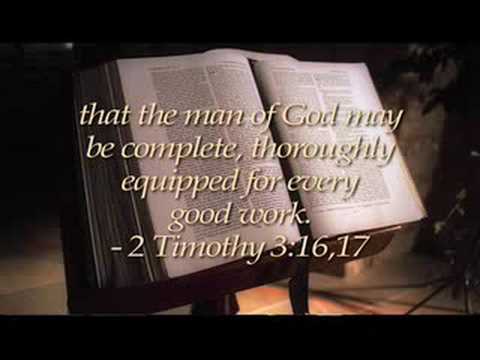
Who knows when Christ will return? Scripture tells us, “the Father alone.” We may see a great harvest as we obey Jesus Christ’s last command to the Church. We may even see the return of Christ in our lifetime. But maybe we will not.
We ought to be concerned with Revival and world evangelization because it is the commandment of the Lord, not because a famous Christian leader has promoted his evangelistic campaign as a “significant end-times move of God.” It is self-centered and elitist to believe that our generation alone possesses this “blessed hope.” It is better to show we love God by obeying His commandments rather than to gear our lives towards a mad rush to the end of time.
Churches and ministries that build as though they want to be around for the next century will likely last longer than those who are expecting Christ to return very soon. In fact, hurry and hype are the bane of the Church. “Last Days Fever” is setting many Christians up for a collapse. Ministries that build on a false hope may expend their energy and collapse in the dust long before they are able to soar on the winds of true Revival.





2 Comments
When is the end time? Study the world events today, yet you add confusion on confusion and give us no answer.
I read with much interest your paper on the rapture and the tribulation. I too teach and preach the commands of Jesus as to should s and should not’s a lot more important that end time events. If the “church” would concentrate more on these type teaching we would have more Christians that are meat fed rather than so many still on milk and ineffective in winning and growing souls for the kingdom>