Eschatology and the Meaning of a Changing World Order
Nearly everyone senses that the world is changing. The economic assumptions that seemed secure a generation ago are under pressure. The political consensus that dominated the West after the Cold War has fractured. Wars that were supposed to establish a stable international order have instead produced exhaustion, debt, resentment, and new rivalries. At the same time, nations that were expected to converge toward a single liberal democratic model are rediscovering older religious, cultural, and civilizational identities.
For Christians, however, there is a deeper question than simply identifying what is changing. We also have to decide what the change means. Two Christians can look at the same wars, demographic shifts, economic crises, political polarization, and decline of Western influence and interpret them in almost opposite ways. One sees the approach of a final world crisis before the return of Christ. Another sees the passing of one historical order and the possibility that something quite different may follow.
That difference is ultimately eschatological.
The collapse of the Soviet Union provides a useful starting point. By the early 1990s, fascism had long since been defeated and communism appeared discredited by its own spectacular failure. Liberal democracy and global capitalism were left standing as the apparent victors of the great ideological conflicts of the twentieth century. Francis Fukuyama famously described this moment as the “end of history.” He did not mean that events would cease, but that mankind’s great ideological argument might essentially be over. Liberal democracy appeared to have emerged as the final form toward which political development was moving.
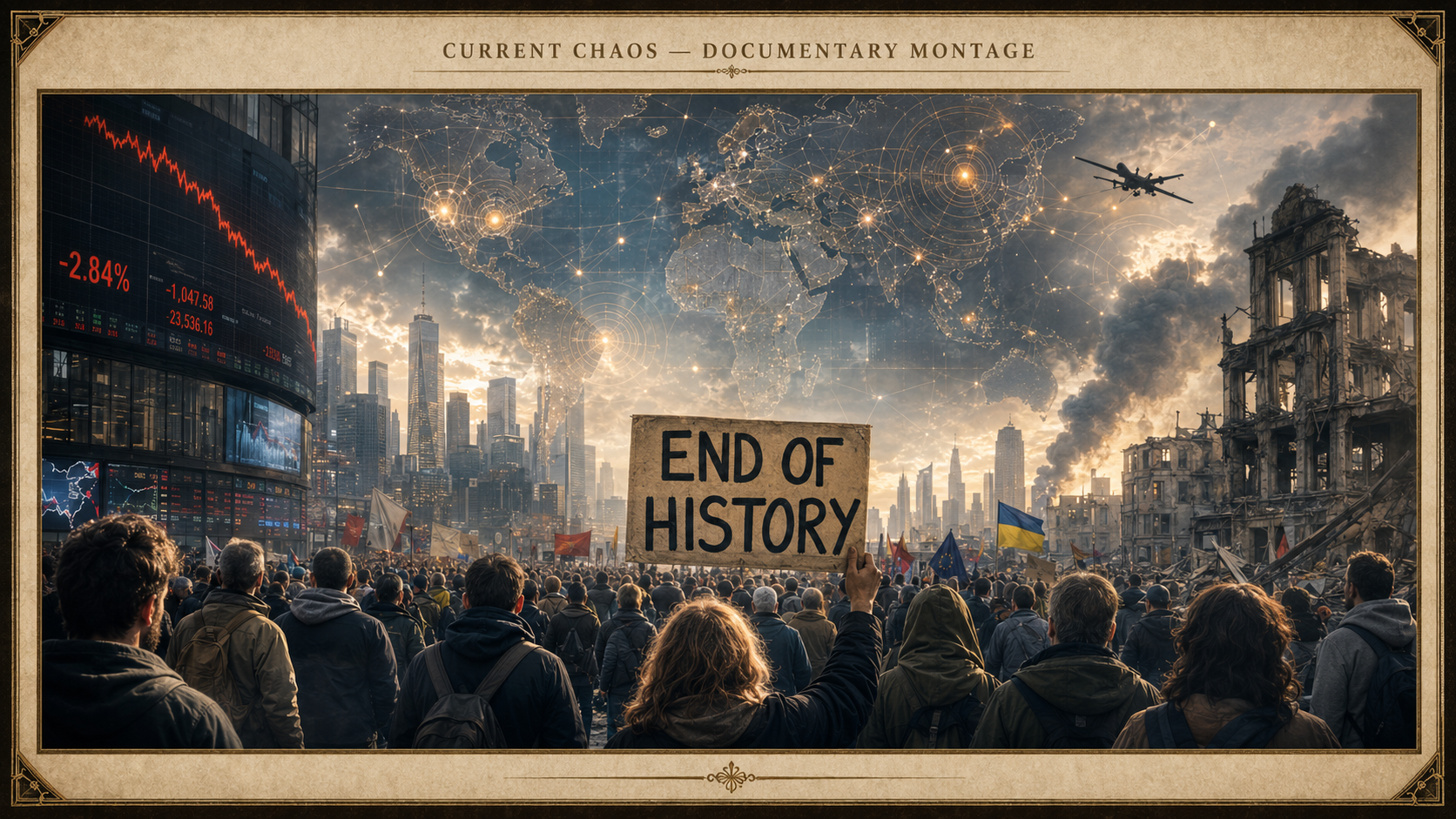
For a brief period, that idea seemed plausible. Markets would become increasingly integrated. National borders would matter less. Religious and civilizational differences would gradually recede. The rest of the world might modernize in different ways and at different speeds, but the destination was assumed to be broadly Western.
Samuel Huntington challenged that expectation almost immediately. Civilizations, he argued, were not disappearing. Religion, historical memory, cultural loyalties, and inherited identity would remain powerful forces, perhaps becoming even more important after the ideological divisions of the Cold War faded.
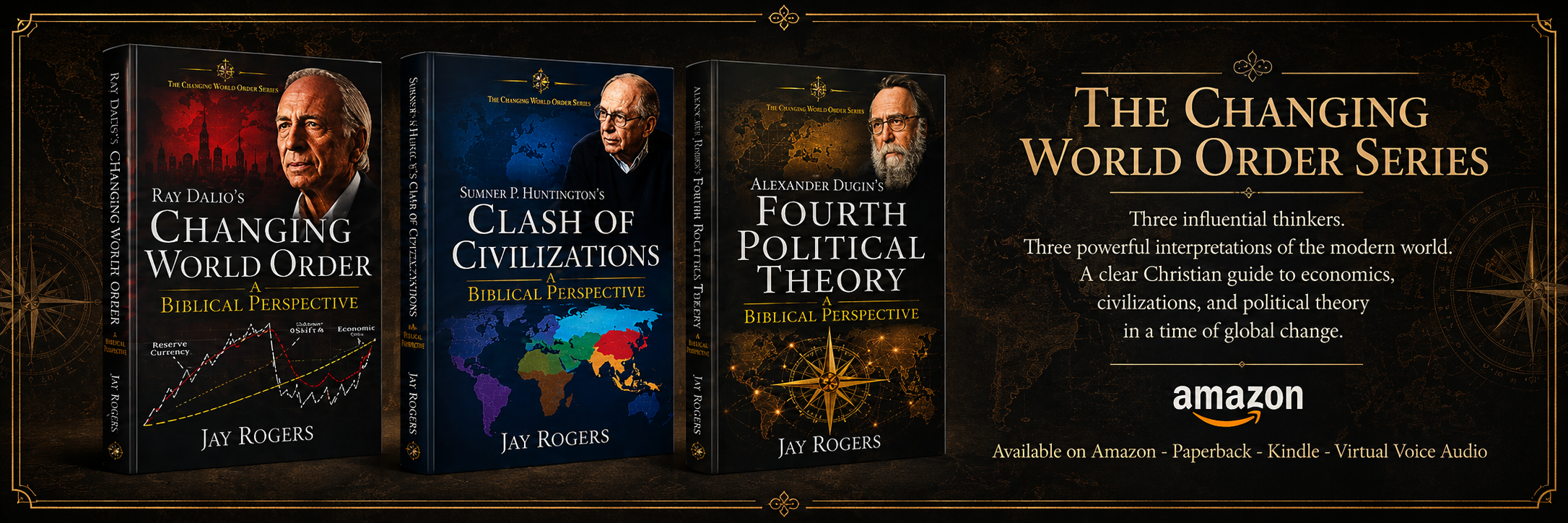
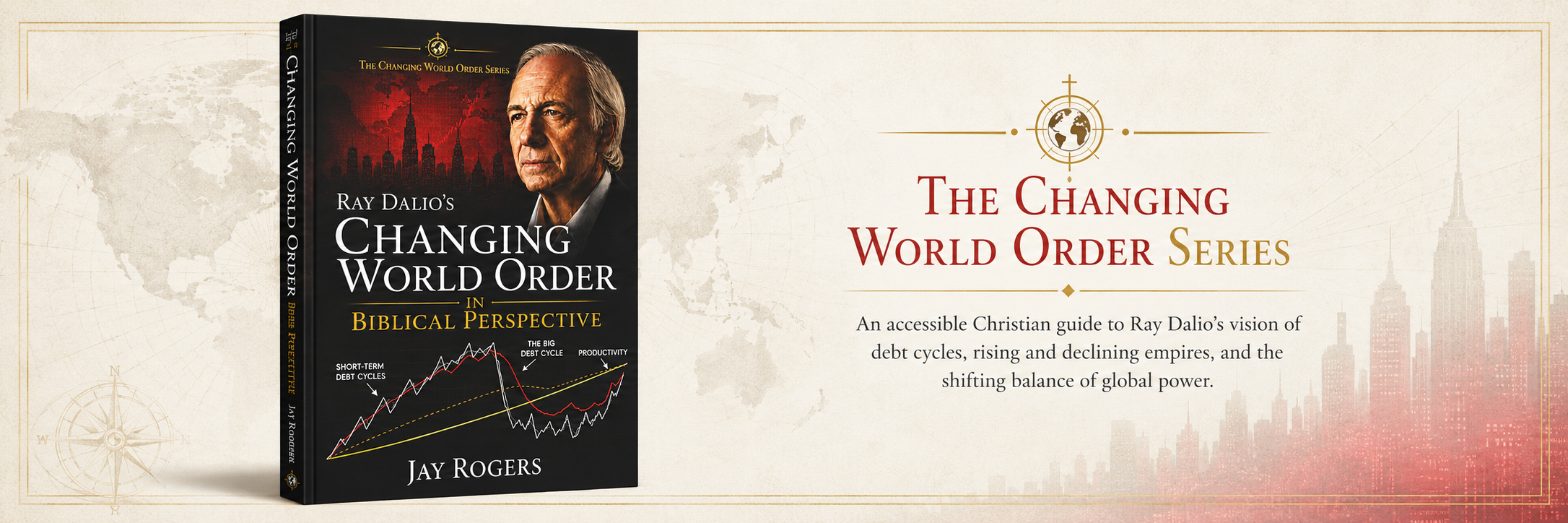
Ray Dalio, writing from an economic rather than civilizational perspective, reaches another version of the same conclusion. International orders are not permanent. Great powers rise, accumulate wealth and influence, overextend themselves, become burdened by debt and internal division, and eventually face competitors.
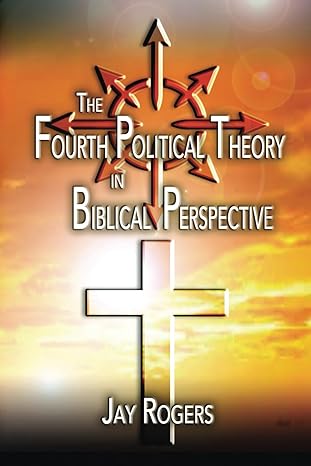
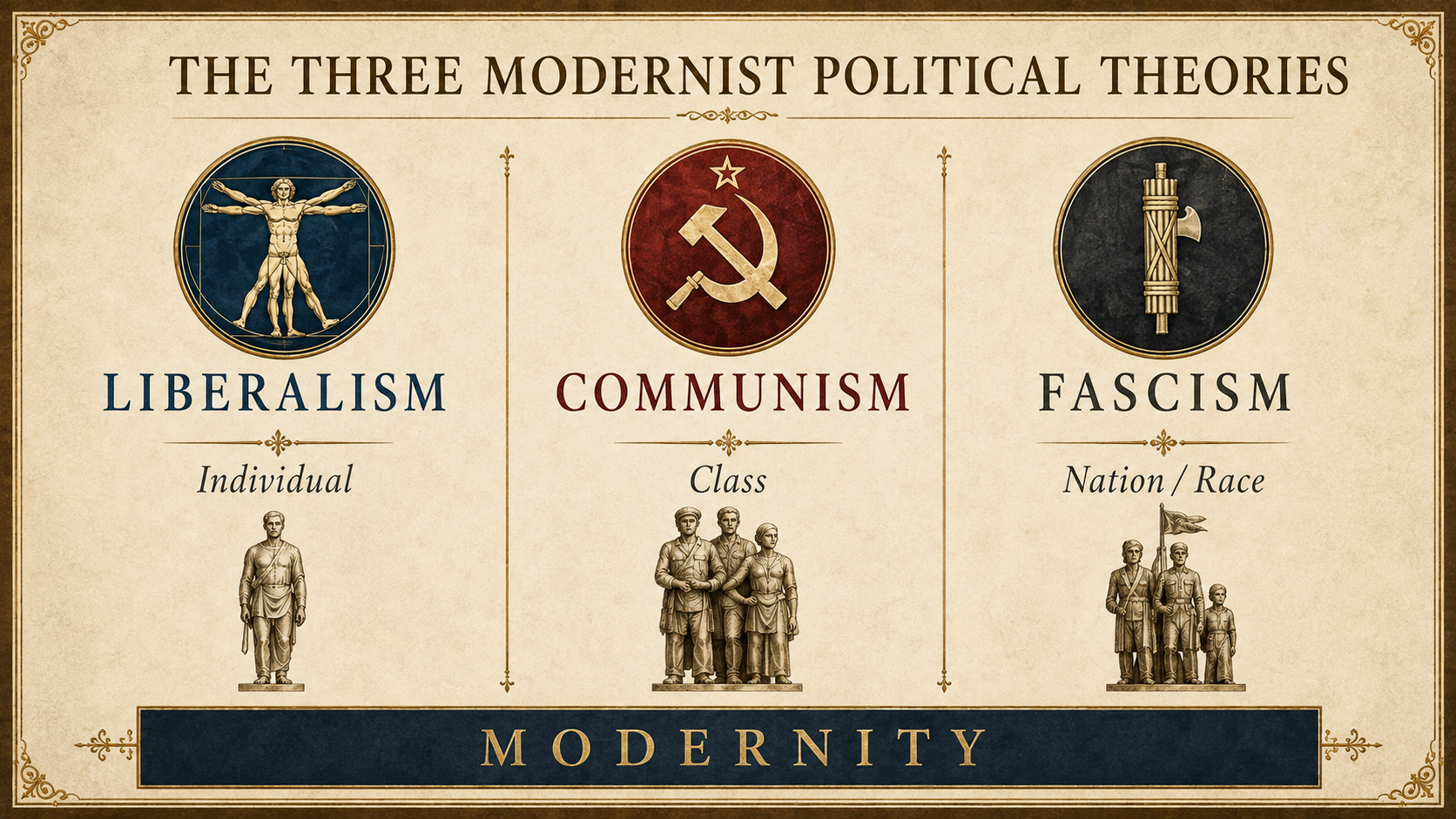
Aleksandr Dugin pushes the criticism of the post-Cold War consensus further. His argument is not merely that American power is declining or that liberalism has encountered temporary difficulties. He places liberalism alongside communism and fascism as one of the three major political theories produced by modernity. Fascism was destroyed. Communism collapsed. Liberalism survived them both, but Dugin asks whether it too may eventually exhaust itself.
These thinkers might disagree with one another on some profound issues, yet they converge on one important point: the world order most Westerners came to regard as normal is historically contingent. It had a beginning, and it can have an end.
Christians should already know this. Scripture gives us little reason to regard any political or economic order as permanent. Kingdoms rise and kingdoms fall. The problem comes when we confuse the decline of a particular order with the direction of history itself.
The twentieth century ought to make us cautious about doing that. The First World War destroyed much of the old European order. Fascism and National Socialism arose in the aftermath. Communism spread across enormous portions of Europe and Asia. The Second World War killed tens of millions. The nuclear confrontation of the Cold War made global destruction conceivable in a way previous generations could scarcely have imagined.
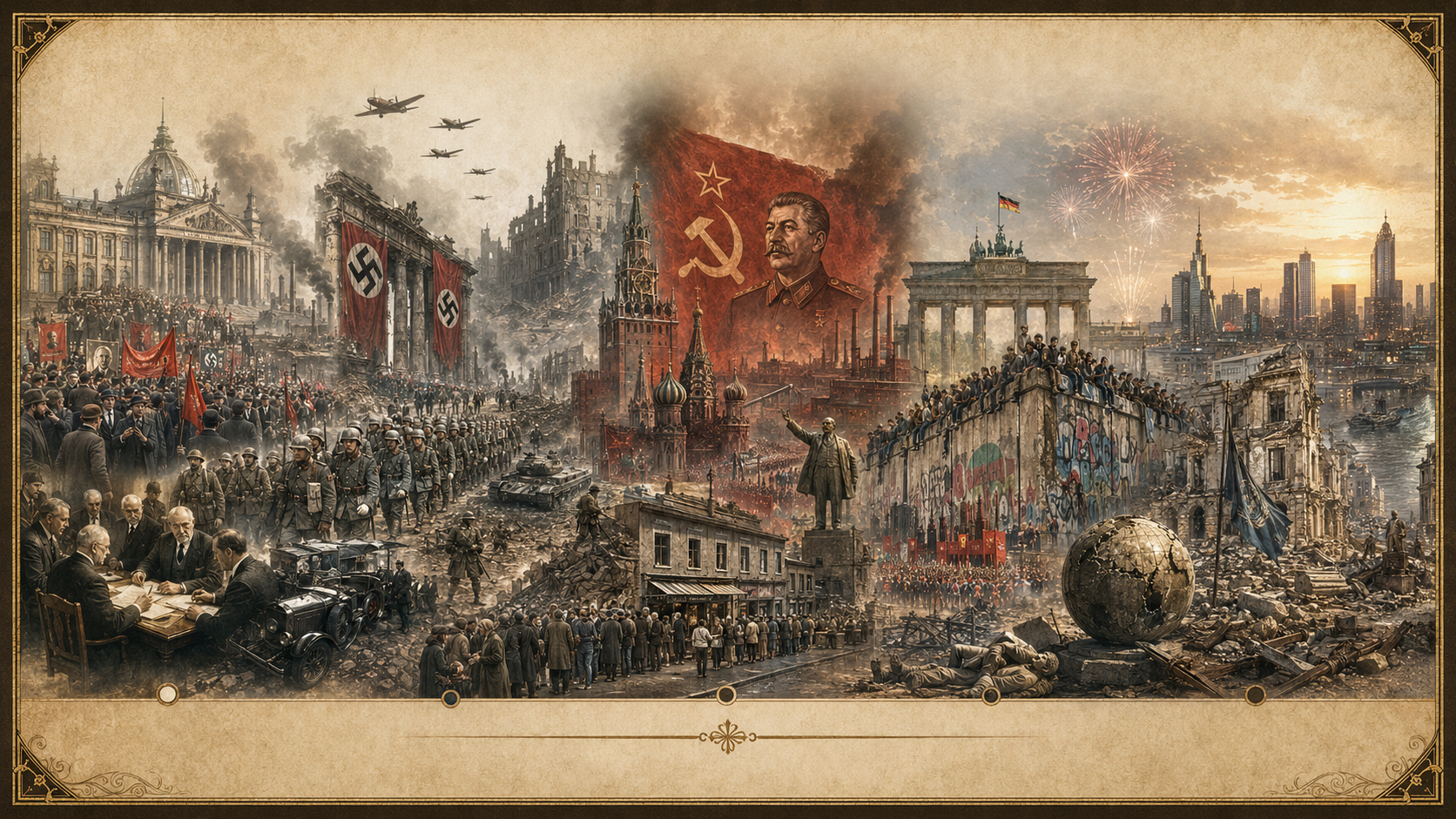
At many points the situation must have seemed irreversible. Imagine judging the future of Europe from the vantage point of 1941, or the future of Eastern Christianity from Moscow in 1953. Imagine living behind the Iron Curtain in the 1970s and trying to predict the political map of Europe thirty years later. The Soviet system appeared permanent until, quite suddenly, it was not. The Berlin Wall fell, communist governments disappeared, and an order that had shaped the lives of hundreds of millions of people passed into history.
None of this means that history naturally improves. It certainly does not mean that every political revolution produces something better. It simply reminds us how dangerous it is to take the mood of one decade and project it indefinitely into the future.
This is one place where postmillennialism and dispensational premillennialism tend to produce different instincts. Both can recognize moral decline, war, tyranny, and political disorder. Both can agree that secular political systems are incapable of saving mankind. The difference is what each expects history to do before the return of Christ.
Dispensational premillennialism generally expects the present age to move toward a final period of international crisis. In its popular forms, wars, technological systems, social apostasy, global political integration, conflicts involving Israel, and economic instability can all be interpreted as signs that the world is moving toward the conditions associated with the Tribulation and the Antichrist. Human attempts at political order ultimately fail, Christ returns bodily, and the millennial kingdom follows His return.
There are sophisticated dispensationalists who are appropriately cautious about identifying current events with specific prophetic texts, so the position should not be reduced to newspaper speculation. Nevertheless, its basic historical expectation is comparatively pessimistic regarding the success of Christianity among the nations before the Second Coming. The decisive establishment of the millennial order lies on the other side of Christ’s return.
Postmillennialism approaches the same historical turbulence differently. It does not teach that every generation will be more prosperous, peaceful, or Christian than the one before it. History provides too much evidence to the contrary. Christian civilization has experienced wars, plagues, persecutions, apostasies, revolutions, and periods of dramatic decline. The optimism of postmillennialism concerns the larger movement of history and the eventual success of the Gospel among the nations, not a smooth upward curve on a chart.
That distinction matters. A postmillennialist can acknowledge the decline of the United States, the collapse of an economic order, or even the disintegration of a civilization without assuming that the Kingdom of God is declining with it. America is not the Kingdom of God. Neither is Western liberalism, the dollar reserve system, NATO, the European Union, or any other arrangement that happens to dominate a particular historical period.
If those things weaken or disappear, the Christian mission does not disappear with them.
In fact, the collapse of political systems has sometimes opened unexpected opportunities. The fall of communism created enormous possibilities for Christian publishing, missions, education, and evangelism throughout Eastern Europe and the former Soviet Union. Many of the projects I was involved with in that part of the world would have been virtually inconceivable only a few years earlier. A political order that had attempted to suppress Christianity ended, and Christians suddenly found themselves working in circumstances that had seemed impossible.
That experience makes me reluctant to interpret every crisis as evidence that history is shutting down. Sometimes an old order collapses because another chapter is about to begin.
Dugin’s analysis of modernity is useful at precisely this point, even where I disagree with his solution. His threefold scheme of liberalism, communism, and fascism encourages us to think beyond particular parties and election cycles. Liberalism made the autonomous individual the principal subject of political life. Communism focused on class. Fascism emphasized nation, state, or race. The three systems fought for supremacy during the twentieth century, but Dugin argues that they shared deeper assumptions inherited from modernity itself.
Whether one accepts that analysis in full or not, the question he raises is worth considering. What happens if the modern political framework no longer provides convincing answers to the most basic questions of civilization? What holds a people together? What makes liberty possible? What obligations do generations owe one another? What are families for? What is sacred? What is the purpose of history?
These are not merely political questions. They are theological and anthropological questions.
Modern liberal societies often speak as though civilization were simply an arrangement among autonomous individuals possessing rights. Communism reduced the meaning of history largely to class conflict. Fascism attempted to make the nation, race, or state ultimate. Christianity begins somewhere else. Human beings are creatures made in the image of God. We are born into families and inherit languages, communities, obligations, traditions, and histories. Nations and civilizations are real, but they are not ultimate. They exist under the lordship of Christ.
This is why I find Dugin’s use of the term logos both suggestive and inadequate. He speaks of civilizations as possessing a distinctive logos — an inner principle or ordering identity that gives them coherence. There is something valuable in recognizing that societies cannot live indefinitely without some common account of reality and purpose. But Christianity makes a much larger claim.
The Logos is not simply the cultural operating system of a particular civilization. The Logos is a Person.
“In the beginning was the Word.”
Jesus Christ is not merely the Logos of Western civilization or of Christendom. He is the Logos through whom the world itself was made. Every civilization therefore stands under His authority and judgment. Every culture contains things that may be preserved, things that need purification, and things that should be rejected.
The Christian response to the crisis of modernity cannot therefore be simple nostalgia. It is not enough to say that America should become Russia, or that we should return to the political arrangements of 1950, or even that everything can be solved by recovering 1776. Christians are not called to reconstruct a museum exhibit. We are called to apply the truth of Christ to the circumstances in which God has actually placed us.
That is one reason the changing world order is so interesting. If Dalio is correct that American economic predominance is entering a period of relative decline, Christianity does not therefore enter decline. If Huntington is correct that civilizations are becoming more self-conscious, the Great Commission is not invalidated. If Dugin is correct that liberal modernity is losing its claim to universality, Christians should not assume that history has reached a dead end.
The opposite may be true. The weakening of an ideological monopoly can reopen questions that had been treated as permanently settled. What is a human being? What constitutes a family? What is freedom for? What is a nation? What should government do, and what should it not do? What does a healthy civilization require?
Christians have a great deal to say about those questions, although we have often allowed ourselves to speak within categories established by others.
For Americans this is particularly important. The temptation is to confuse the fortunes of Christianity with the fortunes of the United States as a global power. If American influence declines, many Christians instinctively experience that as evidence of civilizational apocalypse. Yet Christianity was not born in America, and its future does not depend on Washington remaining the center of the international system.
The demographic and geographical center of Christianity has already moved far beyond Europe and North America. A more multipolar world may create dangers, but it can also create openings. New centers of influence arise. Old political assumptions lose their authority. New communications networks connect people who were once isolated. The Gospel has always crossed imperial boundaries, and it will continue to do so whether the dominant empire is Roman, British, American, Chinese, or something we have not yet imagined.
This is where eschatology quietly shapes practical behavior. If Christians are trained to regard every major disruption as evidence that the historical mission of the Church is almost finished, their natural posture will be defensive. The goal becomes endurance until rescue.
A postmillennial perspective encourages a different instinct. We may be living through a period of judgment and decline. We may be watching institutions that once appeared permanent lose legitimacy. But if history remains the arena in which Christ is bringing the nations under His rule, then Christians must continue thinking in terms of generations. We plant churches, educate children, publish books, establish institutions, evangelize nations, and build things intended to outlive us.
That confidence does not require us to predict what the next world order will look like. I do not know whether Dugin’s multipolar vision will develop as he expects. Dalio’s historical cycles are useful but hardly deterministic. Huntington identified civilizational patterns without possessing a prophetic map of the future.
They are valuable because they help us recognize forces that conventional political commentary often misses.
- Dalio reminds us that wealth and power have histories.
- Huntington reminds us that religion and civilization have not disappeared.
- Dugin reminds us that political systems rest upon deeper philosophical assumptions and that modernity itself is not beyond criticism.
The Christian must then ask questions these thinkers cannot finally answer for us.
What is history for? Who rules it? What does the future belong to?
The answer to those questions changes the way we encounter a period of upheaval. There is no need to minimize the dangers of debt, war, demographic crisis, political fragmentation, or cultural apostasy. But neither should Christians grant those dangers more authority than they possess.
History has survived the collapse of many orders that their inhabitants thought permanent. It will survive the collapse of ours. The most interesting question is not whether the old order can be preserved indefinitely. It cannot. No historical order ever has been. The question is what Christians will do when circumstances change.
That is why I find the present moment more challenging than frightening. We may indeed be witnessing the exhaustion of assumptions that governed much of the modern West. If so, Christians should understand what is passing away, learn from those who have diagnosed the transition, and think seriously about what ought to follow.
The changing world order is not itself the Kingdom of God.
Neither was the old one.
But the Kingdom of God continues its work through every change of regime, empire, currency, ideology, and civilization.
The world order is changing.
That does not mean history is ending.
It means we still have work to do.