Related Articles:
- Opening
- Introduction
- Myth #1: The "historical Jesus" is different from the Jesus of the Bible
- Myth #2: The New Testament was written 100 years after Jesus
- Myth #3: There was no virgin birth and Jesus was not born in Bethlehem
- Myth #4: Jesus did not claim to be God
- Myth #5: The Gospels contradict one another and contain fiction
- Myth #6: The Miracles of the New Testament were invented
- Myth #7: Jesus never really rose from the dead
- The Real Jesus - Part One
- The Real Jesus - Part Two
- The Real Jesus - Part Three
- A New Comprehensive Approach to the Gospels
- Countering Bible Contradictions
CONCLUSION
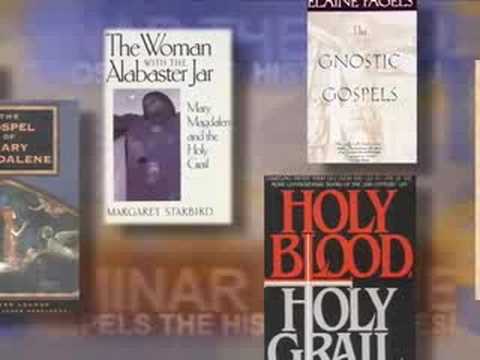
Debunking the Myths
Christians in our day do not need to be persuaded to lay aside the historical accounts of Jesus found in the Gospels, in order to find a historical Jesus. Although there is outside evidence, the greatest proof that the Bible is true comes from the Word itself.
“In the beginning was the Word, and the Word was with God and the Word was God … And the Word became flesh and dwelt among us” (John 1:1,14).
The name given to Jesus is the Word. The authority of the Word of God comes from the fact that it is the testimony Jesus Christ has given of himself:
“If I bear witness of Myself, My witness is true … I am one who bears witness of Myself, and the Father who sent Me.” (John 8:14,18).
The authority of the Word of God does not come from the study of the historical accuracy of the Bible; the study of archaeology to prove the validity of the Bible; or the study of science to prove the account of creation. Instead we believe the authority of the Word because Jesus Christ Himself gave it.
The authority of the Word of God does not come from us being able to prove that it is true. The authority of the Word of God comes from the fact that it is God’s Word. God spoke it; it is truth.
This approach is sometimes called presuppositionalism. The authority of the Word of God is presupposed (believed ahead of time). It is the opposite of evidentialism, the idea that we must seek to prove that the Bible is true by offering evidence. Evidentialism is not wrong; it is important to defend what we believe. However, it is impossible to “prove” Scripture using evidence from philosophy, history, archaeology, science, and other rational proofs. To do so would be to claim that these proofs have the same infallible authority as God himself.
The Word of God preached is all the evidence that a person needs in order to be saved. We do not need to “prove” the Gospel in order for it to be effective. The Word of God preached is a living and powerful sword that pierces the hearts of its hearers. While the Word preached is the only weapon of our warfare, there is already much evidence of the truth in natural revelation.
“For since the creation of the world His invisible attributes are clearly seen, being understood by the things that are made, even His eternal power and Godhead, so that they are without excuse” (Rom. 1:20).
But the truth preached, not the evidence that the Word is true, is the only effective message of salvation. Paul writes in Romans 3:14: “Let God be true, and every man a liar.”
We should not lay aside the evidence completely. Paul preached a sermon in Athens (Acts 17:23-31), and appealed to evidences that God exists from Greek philosophy. But Paul concluded his Gospel message with this idea:
“Truly these times of ignorance God overlooked, but now commands all men everywhere to repent” (Acts 17:30).
Truth is revealed, not by evidence, but by the Word preached. Our problem is not that we lack understanding or need more information. Our problem is that each one of us is a sinner and needs repentance.
The Authority of the Word of God
The authority of the Bible is implied by the fact that we call it: “God’s Word.” Inspiration is the means by which the Bible received its authority. The apostolic writings of the New Testament were boldly described in the same authoritative terms that denoted the Old Testament as the Word of God. The New Testament books were called “scripture,” “prophecy,” “the Word of the Lord,” and so on.
[Scroll the following scriptures on screen over the narration in the following two paragraphs]
That which was from the beginning, which we have heard, which we have seen with our eyes, which we have looked upon, and our hands have handled, concerning the Word of life— the life was manifested, and we have seen, and bear witness, and declare to you that eternal life which was with the Father and was manifested to us— that which we have seen and heard we declare to you, that you also may have fellowship with us; and truly our fellowship is with the Father and with His Son Jesus Christ (1 John 1-3).
Therefore, beloved, looking forward to these things, be diligent to be found by Him in peace, without spot and blameless; and consider that the longsuffering of our Lord is salvation—as also our beloved brother Paul, according to the wisdom given to him, has written to you, as also in all his epistles, speaking in them of these things, in which are some things hard to understand, which untaught and unstable people twist to their own destruction, as they do also the rest of the Scriptures (2 Peter 3:14-16).
Every book in the New Testament contains some claim to divine authority. The New Testament church read, circulated, collected, and quoted the New Testament books right along with the inspired Scriptures of the Old Testament.
The contemporaries and immediate successors of Jesus’ Apostles recognized the divine origin of the New Testament writings along with the Old. All of the great Fathers of the Christian church from the earliest times held to the divine inspiration of the New Testament. There is a continuous claim for the inspiration of both Old and New Testaments from the time of their composition to the present.
The “New” Skepticism
Of course, skepticism about the Word of God is nothing new. And there have been many great works defending the scriptures written by Christian apologists throughout the centuries. What is new to the challenge to divine inspiration of scripture are the voices of doubt coming from those within the Church. Only in the past 150 years has Truth been challenged by those professing to be Christians.
It is the attack on the Gospels by those claiming a connection to the church that has garnered the attention of the media. The fact that there is no positive evidence for the liberal critics’ “historical Jesus” does not discourage the media from repackaging the claims of the Jesus Seminar.
It is startling that a small group of self-promoting liberals using poor scholarship have been able to focus the power of media attention to convince even sincere Christians that the “Historical Jesus” is the true Christ of the Gospels.
As Dr. James Dunn put it:
The Jesus of cheap scholarship, the Jesus-as-I-personally-like-to-imagine-him, has been zealously promoted through the past decade like a fizzy new drink.
— Dr. James D.G. Dunn, Lightfoot Professor of Divinity, University of Durham
In recent years, there has been a flood of publications depicting some sort of newly discovered secret or scandalous information about Jesus. These books, and the TV programs and news articles that represent their findings, ought to be exposed as nothing more than self-promotion resting on flimsy scholarship.
John Spong, an Episcopal bishop, is a prime example of reductionist thinking on the historical Jesus. His position in books such as, Born of A Woman: A Bishop Rethinks the Birth of Jesus, is based on the recurring theme that “what really happened was covered-up” by the first century evangelists. Spong’s reading of the story of Mary, the mother of God, is that she was really a teenage girl who was raped and became pregnant with Joseph participating in a cover-up in order to protect her.
Such analysis prompted Dr. Luke Timothy Johnson to respond:
Having a bishop with opinions like these is a bit like hiring a plumber who wants to “rethink pipes.”
— Luke Timothy Johnson, Professor at the Candler School of Theology, Emory University
From Jesus’ illegitimate birth, it is not a stretch for Spong to argue that Jesus was married to Mary Magdalene, and that the wedding feast at Cana was really His own wedding.
While conservative Christian scholars have dismissed these creative fantasies as pure fluff, many less discerning folk, who are nevertheless serious inquirers into the Christian faith, are led to believe that the liberals’ reconstructed historical Jesus and their version of the origin of Christianity must have a basis in fact.
Christological heresies, or errors about the person of Jesus Christ, are all around us in the modern media.
Although Christians may soon forget the books, films and TV programs of the skeptics, liberal heresy that distorts the true nature of our Lord Jesus Christ will be with us for generations to come.
That is, unless we act.
If we, the true believers of our age, will only use the resources we have before us, then we will confront the apostasy that has gripped much of the Church for the past 150 years and defeat the skeptics once and for all. We will defend the faith and pave the way for the people of God to fulfill the Great Commission.