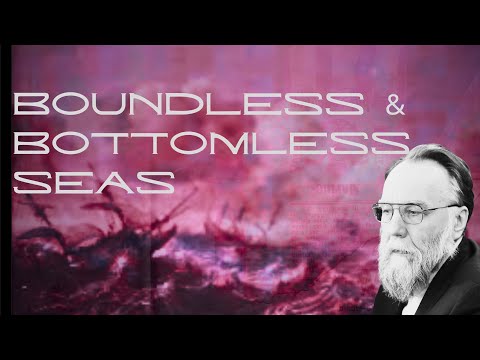
Varn Vlog: Jay Rogers on Aleksandr Dugin’s The Fourth Political Theory
Derick Varn (Interviewer): Welcome to Varn Vlog. Today I am talking with Jay Rogers, author of The Fourth Political Theory in Biblical Perspective and founder of Media House International. We are going to discuss the conservative reaction and critique of Aleksandr Dugin, particularly from a Protestant Christian perspective. For my show, this will be a different viewpoint from what you normally hear, which is usually a mixture of socialist and socialist Catholic perspectives. How are you doing today, Jay?
Jay Rogers (Interviewee): Pretty good. How are you doing? I’m doing well, and thank you very much for having me on. I really appreciate it. I’ve been following your Dugin series for quite a while and have watched all of them all the way through. They are quite interesting.
Derick Varn: I appreciate that. I found your take on Dugin particularly interesting because the majority of critiques I’ve seen from other conservatives have been neoconservative-driven. They often use him as a figure to demonize Russia or the Trump administration. While I am critical of both, I find that to be a dishonest move when discussing Dugin’s influence — which is hard to ascertain even within Russia. I hear very different things from Russian speakers about whether he is of any importance.
I was also interested in the theological takes. For all his flaws — and despite the focus on his early period as a weird, esoteric quasi-satanist — he is a theological thinker, even if not a consistent one from an Orthodox Christian perspective. Why did you get interested in Aleksandr Dugin, and why does he matter to you?
Jay Rogers: I won’t go into a huge amount of detail about my Christian background, but I was raised Catholic and became Evangelical through a born-again experience in college. After graduation, I started asking deeper questions about life. When you’re young, life is often about pleasure and feeling good, but then reality hits you hard. People get married, have kids, and realize life involves sacrifice and sleeplessness. I saw divorces in my family and wondered if I could have a normal life without that heartache.
I was interested in the Bible and theology when I was younger. In college, I wasn’t as well-versed in philosophy as you are, but I took classes and read Descartes and Plato. I have a generic understanding of the major philosophers — I even grew up watching Monty Python and memorized the "Philosopher’s Song" — so I at least know their names. I came into philosophy through literature, reading people like Thoreau and moving backward.
After becoming a born-again Christian, I began traveling to Russia and Ukraine frequently. Between 1985 and 1991, I became involved with a Christian newspaper called The Forerunner. We had the idea to do a Russian version of it. I was skeptical about raising money, but we were able to do it more efficiently than many well-known ministries because I found the right people. I let them handle the operations because they understood the Soviet system, which completely baffled me. I worked with brilliant students from Kiev who were experts in math and business.
I spent several months of my life in Russia and Ukraine over a ten-year period. When I returned to America and read the news, the mainstream media’s picture of the former Soviet Union was completely different from what I had seen. For example, during the 1996 election, the U.S. put a lot of money behind Yeltsin. I thought he was going to lose to Zhirinovsky, the nationalist, who was more popular at the time.
I was also a fan of Aleksandr Solzhenitsyn. I read From Under the Rubble, which predicted a second Christianization of Russia. I wrote articles against the dispensationalist view that Russia would play the role of "Gog and Magog" in the end times. I come from an optimistic postmillennial viewpoint; I believe in Christian progress in the world. I’m interested in how America was founded and in principles found in books like Lex Rex or The Wealth of Nations.
I eventually fell in love with the culture. When they talk about the "Russian soul," it’s a real thing. If you make a friend there, they are your friend for life; they are the kind of people who would drop everything to help you in the middle of the night.
When the Russia-Ukraine conflict intensified around 2017, a friend from Kiev told me things were worse than ever. His younger brother had been sent to the front lines in Donbas. I realized then that the war hadn’t been solved by the Minsk agreements. He explained a perspective that sounded like a "conspiracy theory" to Western ears — the idea of a Western "Ukraine project" — but he was coming from a Russian nationalist viewpoint despite living in Kiev.
I stopped watching mainstream media in 2020 after a heart transplant. I couldn’t handle the stress of the election or COVID news. Instead, I started watching video bloggers and discovered Samuel Huntington’s Clash of Civilizations. I then found Aleksandr Dugin. I didn’t understand him at first, but his work, along with Ray Dalio’s economic views, suggested the world is going through a 500-year shift. We are moving away from the nation-state toward a premodern "civilizational state."
I find Dugin compelling, even if I don’t agree with everything. Recently, he has even said that if the United States is to have a "civilizational Logos," it must be Protestant Christianity. Because people like Glenn Beck portray him as dangerous without actually reading him, I wanted to put something together to explain his work, which resulted in the massive book I just released.
Derick Varn: Your departure from a semi-apolitical conservative Christianity signals that the tacit assumptions of Reagan fusionism are over. While I don’t share your optimism regarding civilizational states, I do agree the nation-state is becoming unviable. I agree with Patrick Deneen that the contradictions of liberalism — trying to maintain a consistent tradition while constantly reinventing yourself — have led to a "small r" republicanism that is removed from civic engagement.
I think Dugin’s complaints about the West resonate because all sides of American political life feel they are losing. There is no coherent message left in Liberalism other than enlightened self-interest. Dugin is right that the Liberal tradition has nullified itself to the point where only atomized individuals or identitarian groups remain.
I also agree that American racialism has a "Christianity-shaped hole" in it. When the identity of Christendom ended in the 15th century, "Europeanness" or "whiteness" was brought in to hold the civilization together. Dugin correctly argues that racialism is not a viable project for holding a society together, which is something even figures like Sam Francis admitted decades ago.
For my listeners who aren’t familiar with Protestant theology, could you explain the difference between Premillennialism and your view, Postmillennialism?
Jay Rogers: If you throw a rock into a pack of dogs, you know which one you hit by who yelps the loudest. Postmillennial Reconstructionists are a very small group, yet people like Jeff Sharlet seem terrified of them. It made me wonder, “What do they know?” [Sharlet, a left-wing academic and journalist, has been a frequent critic of Christian Reconstruction and pro-life Rescue groups, of which I am a part.]
Regarding my background: I grew up in Framingham, Massachusetts, in an Italian and Irish Catholic neighborhood. The family next door were Protestant and had two kids, while the Catholic families had five to nine. My parents weren’t strict Catholics, but they weren’t Liberal either. I took the Bible literally because I reasoned that if it was the Word of God, it had to be true.
I went through a rebellious phase in the ’70s and eventually wound up in an Assemblies of God church. I had read The Late Great Planet Earth by Hal Lindsey [dispensational premillennialism] when I was 13 and became a young "prophecy expert," but as an adult, I realized that system made no sense.
I came to a "Partial Preterist" view [postmillennialism]. I believe the Book of Revelation was written about the Roman Empire at the time, specifically the persecutions under Nero and the war on Jerusalem [in AD 70]. It uses figurative language because the author and his audience were under tremendous pressure. It isn’t a book about the "end times" as popularly understood.
I later attended R.C. Sproul’s church and was always interested in the Puritans and Jonathan Edwards [who were also postmillennialists]. While the Puritans were imperfect, we should reclaim their sense of community. John Winthrop’s A Model of Christian Charity describes a "communitarian" world where the rich and poor care for each other so that no one lacks. That is missing from modern political Christianity.
Politically, I stopped voting Republican for president in 1992. I supported Howard Phillips and the Constitution Party. Theologically, I am a Protestant Reformed thinker, but I have been in many types of churches. I am "Catholic in my heart" because I grew up that way. I believe there is more similarity in basic Christianity than people realize.
Derick Varn: One interesting thing about your book is how you zoom in on the connection to Samuel Huntington. Many people miss that Dugin is well-versed in American political science and realism. Why do you think that connection is overlooked?
Jay Rogers: I think people simply aren’t literate enough in the subject. Huntington was a professor at Harvard when Aleksandr Solzhenitsyn gave his 1978 commencement address, A World Split Apart. In that speech, Solzhenitsyn categorized the world into distinct civilizations — the West, Russia, China, India, the Muslim world, Africa, Japan. Except for Latin America, these are identical to Huntington’s categories.
I believe Huntington was sparked by Solzhenitsyn. Dugin, in turn, has great admiration for both of them. People think Dugin is a "communist fascist," but he was actually arrested [or detained] for owning anti-communist books. They don’t realize that Solzhenitsyn was actually much more of a nationalist than Dugin is. In the West, the Liberals lionized Solzhenitsyn until they realized how conservative he actually was, and then they pushed him aside. I was in a flat in Moscow in 1995, and a program came on TV featuring Solzhenitsyn. He had a daily talk show where he discussed rebuilding Russia. I asked the family I was staying with, "Do you know who this guy is?" because I was a big admirer. They responded, "Yeah, he is an old man who likes to tell us how we should be." Solzhenitsyn was not as popular in Russia because he had been banned. Educated people knew about him, but he was not the figure he was in the West.
I think that’s part of the puzzle. People don’t fully grasp Russian culture. They don’t understand that Dugin was arrested for possessing anti-communist books. [Note: Dugin was briefly detained by the KGB in 1983 for participating in an anti-communist dissident study group.] His parents, who were important in the military, were implicated in that, which was a big deal.
Later, Dugin went through a period where he tried to blend fascism with communism, but it wasn’t the fascism of the Third Reich. He argued that fascists had good points, such as their belief in patriotism and deep culture — going back to the roots of German culture. Though he felt communism was an economic failure, he believed it had great worth because it was against racism and championed the oppressed. As a Christian, I respond to that: I should be in favor of the oppressed and against racism; I should love my culture and my family. That is why I was attracted to Dugin’s ideas.
However, when I post things about Dugin online, I often get the response: "You should read him to understand him, but understand this man is very dangerous." I will ask, "Why is he dangerous?" "Because he is a Satanist, an occultist, a fascist." I try to show that this is not true, but when people accept a certain narrative, it’s very hard to talk them out of it.
Derick Varn: The interesting thing about Dugin’s thinking is that few people have dealt with the split between his early National Bolshevik phase — where he explicitly messed around with occultism — and his later conversion experience. This is partly because we don’t think of Eastern Orthodox Christians as having "conversion experiences."
Jay Rogers: I saw that transition. I am the same age as Dugin — we are both 63 years old. I listen to him, and it sounds like he converted in the late 1980s, but then he went through the "dark night of the soul" experience common in Orthodox and Catholic traditions.
The geopolitics book he wrote — Foundations of Geopolitics — is his earliest translated into English. It is very pro-Russian nationalist and hard to obtain now; you can find it as a PDF, but his current publisher does not carry it. He has essentially renounced that work. Dugin in 1996, when he wrote Foundations of Geopolitics, is different from Dugin in 2009, when he wrote The Fourth Political Theory. As a philosopher, it is not unusual to completely flip on some things. He has renounced nationalism. I don’t think he was ever a racist, but he realized that the national project was attracting a lot of weird people — I know from being involved with the Constitution Party that splinter parties attract strange people. He was fed up with the National Bolshevik Party because they were saying the opposite of their original intentions.
So, he broke with them and began looking deeper into the idea of a "civilizational Logos." It is still very mystical, but it is a lighter kind of mysticism, not the dark mysticism of his earlier period.
Derick Varn: When you read Dugin now and take him at face value — which few people, even some of his Western fans, do — it’s interesting to compare him with the other major figure from the National Bolshevik Party known in the West: Eduard Limonov. Limonov was in literary exile for a long time. He promoted racism but also promoted many people we now associate with Liberals. He was a founder of The Exiled, which launched figures Matt Taibbi, Mark Ames, and John Dolan, with Taibbi being the most famous. Limonov died just before COVID. It has been interesting to watch that comparison alongside the re-emergence of Dugin.
I wanted to ask you, since you have traveled there, what has been your experience with Russians and Ukrainians responding to Dugin? Some people tell me adamantly that he is not important. Some say he is important, but only for outreach to the Islamic or American world. Others say he has a minor influence on United Russia [the Russian political party of President Vladimir Putin].
Jay Rogers: I have many Russian and Ukrainian friends, and all of them have heard of him. Ask the average American, and 99% have no idea. People in our circles or people who listen to Glenn Beck know, because they have been warned about him. Dugin’s [now unbanned] YouTube channel gets very few views, so he’s not well-known in the West.
Everyone I have talked to in Russia has heard of him, but these are educated people. When I was there, I met a lot of very smart young people — artists, computer science majors, musicians. I asked why everyone seemed so talented, and it was explained that the Christian revival that happened in the late 1980s and early 1990s hit the intelligentsia. The children of university professors and thinkers became dissidents, and Christianity attracted them philosophically. When perestroika and glasnost hit, God raised up Christian leaders. I know one Christian group that had the number one pop song in Belarus because they were incredibly talented.
That is the world Dugin comes out of: the intelligentsia. Within that group, you will find people who hate Dugin, people who are ambivalent, and people who like him. You also see different versions of Dugin: the blogger, the university professor, the political scientist. He inhabits different personas. I will read something by him that I find "cringey," but then his books are very deep.
I think the reason Dugin is considered important in Russia is not that he is influential, but that he is in tune with the Zeitgeist.
Derick Varn: I have wondered the same thing. When we hear certain phrases translated from Russian, we assume they are Dugin’s, but perhaps he is simply picking up common talking points in Russia that we miss.
Jay Rogers: The interesting thing is when you listen to Putin, Xi Jinping, or leaders in Latin America talking about "multipolarism," they could have gotten that from Huntington or Maçães, but it makes you pause. I recently heard Senator Marco Rubio say, "The unipolar world is dead now; we can’t expect that to go on forever. The world for most of history has been multipolar." I had never heard a U.S. senator say that. I think it is filtering through, and it is part of this civilizational shift. Dugin picked up on it early, read Huntington, synthesized philosophy, especially Heidegger, and gained traction.
[Note: In a Megyn Kelly interview, Rubio stated: “It’s not normal for the world to simply have a unipolar power, that was an anomaly, that was a product of the end of the Cold War. But eventually you’re going to return back to having a multipolar world.”]
Derick Varn: The civilizational state concept is interesting because if you read political realists now — both conservative and Liberal, such as Peter Zeihan or John Mearsheimer — they agree that the expansionist phase of American empire is over. In the 1990s, there was no denying we were an empire. My own background involves a brief flirtation with paleoconservatism because they discussed peak imperialism and the denial that followed the Cold War. Figures like Pat Buchanan could no longer justify the expansion once the great enemy of Russian communism was gone.
This was an interesting time for Huntington. He is a figure, like James Burnham before him, who was important to both the paleoconservative and neoconservative movements. For neoconservatives, he rationalized the War on Terror; for paleoconservatives, he was a problematic but useful way to rationalize a return to something like Christendom. I will note that my experience with paleoconservatism was not very Protestant; it was heavily Catholic with a few Rushdoonyite holdouts. It was not a political theology with a large sway among Protestants until relatively recently. I believe Trump is a synthesis of Reagan fusionism and paleoconservatism.
Jay Rogers: The shift, as Dugin suggests, is not a horizontal right-versus-left spectrum, but a vertical one. Everything you described falls under "Liberal" with a capital "L" — meaning it upholds individual rights as the political subject. I realized I was trying to synthesize Liberal individualism with Christianity. Dugin helped me realize they are antithetical. The Bible doesn’t teach you to be an individual; it teaches you to be part of a community, to deny yourself, and to love others.
Individualism, in the form of Liberalism, has infected Christianity. A lot of people are waking up to that. The new axis is populism versus elitism. That is why Trump can align himself with people like RFK Jr., Tulsi Gabbard, and Elon Musk, who are "classical leftists" — not neoliberal or postmodernist "woke" leftists. You and I, a Christian reconstructionist and a Marxist, can probably agree on many things that we see as bad. We can identify common problems and areas of agreement.
I always thought the right-versus-left divide was artificial — a "uni-party." People are waking up to the fact that it’s largely a lie, that much of what we read in the media is fabricated. I was talking to a Navy veteran in Florida who attended a Christian event that was then covered by a newspaper. He said the article was a completely negative, leftist slant, bearing no resemblance to the event he attended. He later asked an admiral how much of the media coverage about foreign affairs and warfare is true. The admiral said, "No," not even half. He estimated 95% is made up.
People follow a narrative, and the facts are force-fit to the narrative. Many conservatives are turning off Fox News — even though Trump still watches it all day, and many of his cabinet members are former Fox contributors. There is a disconnect from reality.
Then there is the populist movement. Dugin will continue to be interesting to these people. He wrote a recent book called The Trump Revolution and another targeted at an American audience called The Great Awakening versus The Great Reset, which is very light reading. I think he misses some nuances of American populism because he hasn’t been here, but much of what he says will resonate.
Derick Varn: Ironically, when I read The Fourth Political Theory, I found that many of his portrayals of the American public were actually based on the Liberal media consensus. I thought, "That’s what Liberals say, but that’s not how Americans actually are." Educated people who are isolated from the vast majority and live in expensive urban areas don’t know what it’s like to live in Alabama, Florida, or Utah.
In the last election, I told my Liberal friends that the economy was doing okay if you were a billionaire, which would also be true under Trump. But they are removed from the reality that people are angry because they are buying groceries that have gone up 20% to 30% over five years, even if that increase is statistically described as only 3% to 9% in brief chunks. The middle class did not see much wage gain. Of course, people are angry, and it’s strange to pretend it’s all about individual or systemic racism. That is why this is happening. I try to tell people on the far left that if you only know far-left individuals, you cannot talk to other people. The same is true for evangelicals — you need an outsider test to see how you sound to those who don’t share your worldview.
Jay Rogers: I’m a high school teacher so I encounter that on a daily basis.
Derick Varn: I’m a high school teacher, too, but I also teach at a community college as a side gig.
Jay Rogers: I am a teacher, and my wife is a waitress. We are both in our 60s. My wife came here 20 years ago from Venezuela. For college-educated people, we are not high earners, but for Florida, we are established. I taught in a Title X school with gangs and poverty, and now I teach in a more conservative area.
We are the richest country in the world, yet we have people living in poverty. You can go to a supposed "ghetto" in Moscow, and it doesn’t look much different from other areas of the city. I tell them, "I will take you to a ghetto in Orlando so you can see a real one."
Derick Varn: I have to remind people that a lot of leftists are also very far removed from that reality. Even if you go to Atlanta, I tell them, "No, go to Macon, go to Robbins, go down to the bad side of Savannah, not the tourist district. Go down to Jacksonville, Florida." You still see people living in buildings made out of cinder blocks, and we are the richest country in the world. That reality doesn’t exist for wealthy New Yorkers or Californians.
One hand, this worldview is sympathetic to right-wingers complaining about left-wingers. For example, we talk about educational equity, but the focus is on universal college education. I have lived in countries that had it; it still favors the rich unless you have infinite money to provision infinite universities. Why don’t we focus on better high school education with more practical outcomes, teaching people multiple skill sets, including things like fixing their car?
There is a fundamental contradiction in Liberalism. I agree with Dugin that most of the modern world, particularly the American world, is Liberal. When I talk about right and left, I am talking about the right and left of Liberalism, post-14th century. There are European political developments that aren’t Liberal, like Joseph de Maistre. Even Julius Evola critiques fascism for being too Liberal, too mechanistic, and too into biological race. A lot of leftists mock that, but I think Evola was sincere.
Jay Rogers: Do you think it was the socialist aspect of fascism he didn’t like?
Derick Varn: It was the socialism, but even more so the racialism, particularly biological racialism. He had this idea of "spiritual race." I would say, from a Jewish perspective, Evola was anti-Jewish, and he did not like the Jewish religion. However, if you converted to his syncretic perennialism, he would probably accept you. Your biology was not the primary concern for him.
Jay Rogers: I think, too, that a large part of the anti-Semitism in Nazi Germany was political — they felt Jews were enemies of the state. As you know, Heidegger had Jewish mistresses who were protected. He wasn’t a very good Nazi, but they figured they were safe with him. There were Jewish fascists, too. I’m not defending fascism, but I am saying the idea that it was solely about race is complicated. There was a mystical element, and figures like Evola and Himmler probably would have liked it to trend more in that direction — toward exploring the "Aryan spirit" and that type of thing.
From a Christian worldview, that mysticism is a problem, and I want to be clear that Evola was not a Christian.
I think Dugin is also right that Marxism emerges out of Liberalism, just as he says fascism does, as a response to it.
I’ll say that one more time because I think that’s important. Marxism emerges out of Liberalism as a response to Liberalism.
I know many right-wing anti-Modernist philosophers say that, too.
Derick Varn: I find it maddening when I listen to people like James Lindsay blame problems caused by capitalist Modernity on me [as a Marxist]. I think, "One, we are not that powerful, and two, you are really mad about Liberalism but cannot admit it because you are also a Liberal." If you dealt with that, it would lead to a crisis. So, you blame every problem that has emerged from Liberalism on "cultural Marxism" or whatever.
Jay Rogers: I wanted to explore Dugin’s critique of Modernist theories in general. He argues that there is no such thing as a Marxist today — only "neo-Marxists" — because the core elements of class warfare and the dialectic have been gutted from Marxism. What we have is a simulacra, a simulation of Marxism, like Gramsci’s cultural Marxism, social justice, and the whole woke thing.
My friends call these people "communists," and I say, "No, they are not communists; they are just Liberals. You call them communists because you don’t know what else to call them. They are actually more like you than you think.”
What do you think about that critique? Do you think there are still Marxists today?
Derick Varn: Honestly, my critique would be slightly different than Dugin’s. Dugin makes it about ideology because he thinks ideology is a major driver. I would say there is no real Marxist movement because there is no workers’ movement with which Marxists are cleanly in dialogue. Historically, Marxists were never in charge, but they were part of the workers’ movement. Today, there is no such movement for them to merge with. They keep trying to create one, but often they are being dishonest about it. For example, all the talk of union renewal ignores the stats: while unions are much more popular — even conservatives like them more than they used to — union membership is very low, around 11% to 15% of the population.
So, it is false to pretend that we are in a big socialist heyday. Like you, I think a lot of today’s Marxists who say they like socialism, when asked what socialism is, are basically describing progressivism from the 1930s. They think it is the same thing that FDR did. It is weird to me because they have simply flipped the traditional fusionist conservative idea that social goods and socialism are the same thing and decided that it is good.
Jay Rogers: They don’t see it in front of their face. We are in a Liberal socialist world, and they don’t realize this is the air we breathe. It is like being on the Dune planet: you don’t realize you are breathing the spice until your eyes turn blue. Dugin has enabled me to see that I am a Liberal Modernist because that is what I grew up with. I realize it is incompatible with my faith, and I need to critique it.
That is why I asked you about Marxism. Dugin goes on to say that fascism was a critique of Liberalism and communism from the right. Do you think that is accurate?
Derick Varn: I do agree with that. I have gone to the point of saying that fascism is also socialism in crisis, which upsets pretty much everybody.
Jay Rogers: You can be a socialist and be a Liberal, a communist, or a fascist. Socialism is an economic system; it is not necessarily an ideology.
Derick Varn: I agree with that. I sometimes gently mock my Mormon friends who talk about "rugged individualism." I point out that their symbol is literally a beehive, and they believed in common property until Brigham Young’s reforms in the 1890s.
The world we live in is so pervaded by Liberalism and the responses to it that when people see things that are older or more humanitarian — which is most of human history, frankly — they do not know how to respond to it other than calling it communist or fascist because those are the two things that emerged from Liberalism after it developed into full-blown capitalism.
One of the things I realized reading Dugin’s Fourth Political Theory is how much I needed to understand Aristotle. Even though Dugin is an Eastern Orthodox thinker and skeptical of Western Christian rationalism and their love of Aristotle, you still need to understand certain political categories, as well as the postmodernism he deals with, to grasp his concepts. It has been a challenge for me to go back and make sure I understand the Greek categories and Aristotle better than the watered-down liberal form I got in college.
I have even gone further than saying there’s no Marxism today. I meet Platonists, and I think, "You are not a Platonist; you cannot exist in that episteme." You can pull from Platonism or be a Neoplatonist, but you cannot put yourself in Plato’s mind. Similarly, with Aristotelians, you cannot make yourself a Thomist again. That world is not really our world; Neo-Thomism must emerge in response to the Liberal world you grew up in.
Jay Rogers: I am going to help out some of your viewers here who are like me. You mentioned Alasdair MacIntyre. Explain who he is.
Derick Varn: Alasdair MacIntyre is a former Marxist who converted to Catholicism in the late 60s or early 70s. He is from Britain but lived most of the last half of his life in the United States and died recently at almost 100 years old. He was part of the movement for the return to virtue ethics. He was a communitarian, a virtue ethicist, and a Neo-Thomist. He thought we had to reckon with the fact that things like human rights — justified historically by a mix of Catholic natural law and its Protestant liberalization in John Locke — are no longer believed by modern Liberals. No one today believes in Locke’s natural law. So, how are they justifying all the "rights" talk?
MacIntyre says you cannot justify it theologically or materialistically; it does not logically flow from Kant’s ethical system (deontology) or utilitarianism, which is what most Liberals selectively adhere to. Utilitarianism is about the greatest good for the greatest number, but who counts as part of that number? MacIntyre says you cannot make any decision from that framework. The best you can do is pick up the virtues of your culture, see them modeled, and work that out. Once you do that, you can act fairly objectively, but there is no singular rule from which you can possibly deduce an ethical norm.
His project was to try to bring back Thomistic philosophy — which is Thomas Aquinas’s ethical philosophy of the early Modern period that mixes Islamic natural law, traditional Catholic theology, and Aristotle, and is the basis of Christian rationalism. My critique of MacIntyre was that you cannot really bring the world of Thomas Aquinas back; we do not live in that world.
Jay Rogers: I don’t know how much Dugin I have read compared to you. I have read about five books, including The Fourth Political Theory and the shorter The Great Awakening versus The Great Reset. I’ve looked at his two Ethnosociology books, and his new long series that is not yet in English. I mostly know Dugin through Michael Miller, his translator.
Derick Varn: I have read Putin vs. Putin, The Fourth Political Theory, and The Rise of the Fourth Political Theory and the Eurasian Mission. I read them oppositionally. I have gone back and forth on whether I am wasting too much time on him, as many American conservatives do not care about him. But he is speaking to a certain group of people, and I want to understand why.
Jay Rogers: There are things that scare people about Dugin. The friend who warned me about him mentioned Foundations of Geopolitics and gave me quotes, and I had to tell him Dugin no longer follows that.
The other thing that scared me about Dugin is that he seems anti-individual rights. I realized he is not so much against individual rights as he believes they do not exist. Individual rights are a construct from the Enlightenment, based on the idea that people are born tabula rasa (blank slates), join a community through social contract theory, and the state exists to protect their natural rights.
That is not what Christianity teaches. Biblical law teaches that we are human beings made in the image of God, and therefore have dignity and value. Our rights are based on community. Rights do not make any sense unless you are in a community. How can someone violate your rights unless you are in a relationship with people? Individual rights are not something you possess; they are liberties.
Dugin critiques Liberalism and then asks: Is there anything good we can get from it? Yes: Freedom. He is talking about a different kind of freedom than what people think of when they demand rights for every new subgroup — trans rights, gay rights, animal rights, and so on.
He says that in a world of ever-expanding individual rights, the state ends up becoming your god that must protect and create your rights, and therefore can take them away. This creates what Sartre called a "prison without walls." Solzhenitsyn, in From Under the Rubble, wrote that the idea of rights divorced from Christianity becomes a parody that is oppressive to the very people who champion it. That part of Dugin — the critique of rights divorced from community — is very compelling.
Derick Varn: I agree with that. Some leftists have called me a reactionary specifically on this point, because I have said we do not have a consensus on the justification of human rights as the framers of the Declaration of Independence understood it.
Also, both conservatives and modern Marxists miss the fact that Marx and Engels said in multiple places that rights entail responsibilities. You have rights as part of a political community, and you also have inescapable responsibilities. You are not completely free; you are bound to something. The goal of classical Marxism, which I am sympathetic to, was to undo class, not just to seek revenge on the rich. A lot of Christians say that is utopian, but that was the goal. Today, the goal is often just, "There should be no billionaires."
I live in a world where, on certain cultural things, listening to Tucker Carlson makes me sick, but then he will talk about things like people being able to afford houses. He will say that the fact that there is so much accumulation is obscene. How can I reject that? My goal is not that different from the world he wants, and that also entails us having to be in community with each other.
That is what has tied me in knots about contemporary left-wing politics. We have to admit that we do not share a worldview with conservatives, and we shouldn’t pretend to. I do not think we should just appease them. But we have to know where these groups are coming from and where compromises can be made.
The current instantiation of the Liberal worldview makes this impossible because you are so atomized that there is no distinction between personal and political ethics, or personal and political motivations. People say, "My politics is my ethics is my morality." That makes no sense to me. Your morality is about you. Your ethics is about your relations to others. Your politics emerges from how you deal with force in a society. Those are different things, and the Liberal worldview has collapsed them into one thing that is very ego-centric — about your individual rights, beliefs, and manifestations — and ignores that all of those exist in a social context. Even when you talk about systems, you don’t look at the people who make up those systems.
Jay Rogers: I mentioned earlier how I grew up in a neighborhood where we had nine kids next door and five across the street, and we played kickball until dark. Everybody knew each other; I can still name all the kids. Today, I don’t know who my next-door neighbor is. People don’t realize how much things have changed in the last 50 years. If you are of a certain age, you were born into the atomized world where everything is individualistic, and your friends are online, not next door.
That is one of the things I liked about reading Dugin. He has these odd ideas that seem completely crazy until you realize there is wisdom in them, like when he talks about the metaphysics of the washing machine.
When I was in Russia, many people lived in one- or two-room flats. They didn’t have washing machines; they washed their clothes in a tub and hung them on the balcony. Later, people began buying washing machines. Dugin wrote about this at the time, saying you could put your money into a washing machine or refuse to do so, but people would call you crazy for refusing the convenience.
He uses this as a metaphor, arguing that there are technological and ideological things people say are mandatory — you have to believe this. But we become tied to them. If someone says no to having a washing machine, people think you are backward. This applies to the high-tech world we are entering, with AI and biological engineering. He says the Fourth Political Theory emerges when a group of people can say no.
We could have a cul-de-sac where all the kids play together again, where parents say, "No, you’re not going to play video games; you’re not going to have this device." It would be difficult, but people could still do it. Everyone misses the community, but no one wants to go back to it.
I think the things you like about Tucker Carlson are the everyday, common-sense things, like his promotion of fly fishing, that we need to get back to an agrarian, localist society. Then there are other things he says that sound like conspiracy theories.
Derick Varn: This is a thing I think people have to deal with. One contradiction I would point out to Marxists is that they tend to like capitalist production and Modernity because it enables you to do things in massive ways. What they hate about it is class, but they also admit that social class is necessary for maintaining a capitalist society. Most Christians would not say that social class itself is the problem, but the treatment between social classes is.
I find it interesting. I mentioned that my father was a spiritual "jumper." He was raised Methodist, discovered he was Jewish and became seriously Jewish, then became a Buddhist, but he died a Joel Osteen Christian. My response was, "Man, you picked the most self-flattering form of Christianity." Who am I to adjudicate what is heretical, but that and the Jordan Peterson stuff feel like heresy to me, even from a Protestant perspective.
Jay Rogers: Yes, Petersen is basically Jungian. If you think Jung was a good Catholic Christian, then you could say Jordan Peterson is, too. I was really into Jung when I was a psychology major. I found his work interesting as a construct, but I eventually realized its flaws. One of my professors knew Jung’s niece, and she said her uncle used to do mescaline all the time. If you read Jung, he has ideas like "race memories," which nobody believes today. But apparently, Jordan Peterson does.
Derick Varn: My favorite thing is when Jordan Peterson talks about Christianity, but if you ask him point blank if he believes in the Judeo-Christian God, he will not answer positively or negatively.
Jay Rogers: I have heard skeptics ask, "Do you believe that if you took a television camera and went back to Judea in AD 30, you could see Jesus rise from the dead?" Petersen cannot answer that. I, however, would say without equivocation, "Yes, I believe that historically it happened." If I did not, I would not be a Christian. When I had my heart transplant, I thought, if I can trust my doctors to take a heart from a person, put it in me, and keep me alive, can I believe in God to raise my body from the dead?
I haven’t got a big problem with that. You know, it’s all your perspective. It is a matter of faith because you have faith in people and you have faith in God. But it is not like a blind faith where you say, "I know it seems impossible, but I just believe it." It’s more like, "Yeah, I know God can do that because He’s very big and He can do it." That’s how I look at these kind of questions, and I don’t think someone like a Jordan Peterson should have a problem answering that question in that manner.
Derick Varn: No. Well, I was going to ask you this. One thing I’ve noted — and I know this is an unpopular opinion on the Left — but I have actually said that I would rather deal with religious conservatives if they are sincere and religiously literate at all, than secular ones. This is because I know what their community basis is. I know what things we can share and not share. I know where the points of compromise are, if they are consistent. At least there’s a common ground of both conflict and also compromise that can be had. Whereas with secular rightists, or secular rightists who use Christianity to endure themselves to their constituency, I have no idea what we could possibly compromise on.
Jay Rogers: There’s a lot of that. We all know there is. I knew a guy named Colonel V. Doner — his first name was actually Colonel, not a military rank — who was the founder of ACTV [the American Coalition for Traditional Values co-founded with Tim LaHaye in the 1980s]. The ACTV was one of the major organizations of the Christian right during that era, the forerunner to the Moral Majority. Doner was in the original meeting with Paul Weyrich and Jerry Falwell when they founded the Moral Majority. Weyrich had his own group for Catholics. One thing they decided was that they should not talk about Christian values, biblical values, or biblical law, even though they all agreed with that. What they should talk about is family values and traditional values.
They catered the language to appeal to a broader base rather than what they actually believed. Doner came to reject that, saying he had been playing games. I thought that was very interesting — that even the people who founded these movements, which people think are so ferocious, tailored them to be palatable. The old bumper sticker was, "The Moral Majority is neither," and that is actually true. There aren’t that many moral Christians who want to uphold biblical law in society, nor is there a majority. And the ones who say they’re the majority aren’t really that moral. Doner later admitted he wasn’t living a very pious Christian life at the time he helped found the movement. I found that very strange at the time because I was sincere.
Derick Varn: I like your point about people who cynically use religion, who are secular. I remember realizing that about Leo Strauss, a major contributor to neoconservatism. He basically felt you take religious beliefs — because "we’re really all good secret Liberals" — and use them for the maintenance of a Liberal society, not because you think they are real. In fact, it’s better if you don’t think they’re real, and you’re just doing it for the "non-modern dupes," which is most of the population.
This is fascinating as an Enlightenment philosophy because it goes against the universalism of the Enlightenment right there. It’s interesting that this was a major influence on American conservative thought — including religious American conservative thought — from the 70s until about the end of the Bush administration. I don’t see people having really reckoned with how fundamentally dishonest that is. It treats your constituency and the religion as dupes. I would view it as not just heresy, but flat-out idolatry. I am very fascinated that this was tolerated by so many political religious thinkers for so long. Why do you think that is? In that sense, I get why Dugin would have contempt for American Christianity, because he would just see it as a sham.
Jay Rogers: He has contempt for the Calvinist foundation, which I don’t really understand, because I think he just doesn’t understand Calvinism that well. However, he says he likes John Wycliffe. If you understand what Wycliffe taught, almost every Protestant sees him as a forerunner of the Reformation — salvation by faith alone, Sola Scriptura, the whole package. He also mentions his disdain for the Methodists and the Dispensationalists, and kind of almost puts them together, but they are completely different groups. So I think part of it is due to ignorance. He says he likes Emerson and Thoreau. I like them too; I think they were heretics, but you can see the influence of the Great Awakening — or a more pietistic strain of Christianity, the idea of an inner light.
American Christianity is actually a hybrid of Puritan thought and this experiential revivalism that came out of the Great Awakenings. I think the Puritans were that, too. I don’t think they were what people think of as strict, dour Calvinists; they were sincerely seeking after inner peace and the ability to worship God on their own.
He probably needs to understand American Christianity a lot more. He has said recently that if America is going to become a civilization-state, that’s what it needs to be based on. It’s not going to be Orthodox or Roman Catholic (unless we get a lot of Latin immigrants). America has always been a hybrid of different strains of Christianity. We are very pious and spiritually religious, but Christians don’t want to have that much to do with the culture. When we do, it’s a mess, and people get very confused about the role of politics.
That’s where I find Dugin very useful: we do need to move out of Liberalism into a Fourth Political Theory. We can’t go back to what the Puritans were, but we can look at some of the foundations they had, embrace those, and then invent something new.
If you had described the capitalist system to the founders of America, they wouldn’t have known what you were talking about. Yet, American Christians claim the Puritans were capitalists. What we have today isn’t really capitalism. What we have is corporate capitalism, where the elite business class and the permanent political class get together and give lots of money to big corporations. That’s not capitalism; you could also call it corporate socialism. A lot of Christians are waking up to that now. Dugin is relevant for saying we can break out of that model into something else.
If you talked to people in the late Middle Ages about Western democracy, they wouldn’t know what that is either. One of my favorite things to do in Boston is to look at the historical sites. I remember a tour guide at Faneuil Hall asking people, "What are the Puritans known for?" The most common answer is democracy. She has to explain, "No, the Puritans were not a democratic society; they were actually very feudalistic." We have a lot of anachronistic ideas about our past. Not all those things were bad.
Dugin would say there might be aspects of feudalism we want to recover. He talks about the metaphysics of debris, where you go in and assemble things that were discarded. He quotes Isaiah, saying what was discarded was the chief cornerstone: Christ was the stone rejected by the builders, made into the chief cornerstone of the new temple (the church). He consistently relates his own metaphysics and mystical ideas back to the Bible. He doesn’t do it the way Liberals do, patronizing people who believe in the Bible. I think he actually does believe this.
Derick Varn: Right. I’m not completely sure, but you might have convinced me, and reading your book suggests there’s probably a lot more to the theological element that even some of his fans in America don’t understand.
You’ve mentioned some of your critiques of Dugin. I’ll just recap them. You agree with him on:
- The ending of Liberalism.
- The rise of civilizational states (though you think we filter the concept through our Modernist view).
And you disagree/critique:
- His apparent historical ignorance of Protestantism and Calvinism specifically.
- The fact that his critique of individual rights is not obvious to many people.
What are any other things you disagree with him on?
Jay Rogers: (I am a Calvinist, by the way; I spent 10 years in a church led by a leading Calvinist spokesman, R.C. Sproul). I think that he [Dugin] has an overly simplistic view of American politics. I think the same way we look at Russia — like, "How is Putin viewed?" — and I have to explain that Russia is 140-something million people, and only about 78% of the population is actually ethnic Russian. Ten percent of the population is Muslim, and there are 180 different ethnic groups. They are all Russian nationality, but not all are Russian ethnicity.
That’s another thing: when people read Dugin, they don’t understand that what he’s talking about when he discusses ethnicity is not nationalism or ethnic nationalism. He’s saying you can have a culture — like America’s culture was Anglo-Saxon Protestant — that is monocultural. You can’t really have a multicultural civilization; one monoculture will win out if the civilization is going to remain strong. But there also has to be room for a diversity of ethnicities.
Russia is different from America in that these ethnicities have been there forever; they preceded the Russian culture. Russian culture absorbed them, but didn’t completely absorb them. Even during the Soviet Union, the people were "Russified," but their traditional cultures, festivals, and languages were celebrated more so than under the Tsars. I was in Tatarstan on two trips, where half the population is Tatar. I was in another town where a good portion was Romani people (Gypsies). There are little countries within Russia.
So, people think that what Dugin wants is this homogenized world where Russia will just take over. He actually doesn’t. What he wants is for Russia to be a very strong culture based on Russian Orthodox Christianity, but he wants the Muslim ethnic groups to be there. As a Christian, I and many of my friends cringe at that; we want Muslims to accept Jesus Christ.
But one thing I came to realize is that these people aren’t necessarily our enemies, but they could be allies in fighting Liberalism. I’m a school teacher in Orlando. I have Muslim students. Some of my conservative Christian friends think that all Muslims are jihadists who want to declare Sharia law and kill us all. I tell them, "You don’t understand who these people are. They came here from Morocco, Egypt, and different African countries because they wanted to work, make money, and have some freedom." Yes, they might be religious Muslims, but occasionally, one of them converts to Christianity. I have met the parents, and I think, "This is the kind of mother we ought to have in America who really cares about her daughter’s education." I wish all my students had mothers like that, because we’ve become so Liberal that parents are not in charge of their kids anymore; kids have rights. I have Asian kids who complain about that, too.
These traditional cultures bring strengths with them that are compatible with a Christian conservative worldview, even if they’re not Christian.
Derick Varn: I think that’s important for my audience to hear: that you’re not a flaming xenophobe.
Jay Rogers: No. My wife is from Venezuela. I got married fairly late in life and decided I had a high chance of getting divorced due to my family history. I decided I wanted to marry a religious person from another country, perhaps even Catholic, which my wife is. We don’t have the same theological beliefs, and we disagree on a lot of stuff, but we have the same values. Having the same values is cohesive. That’s very much Duginism right there — you have the same values, and we can exist in a multipolar world with other civilizations. We can admire and learn from them.
Derick Varn: Huntington would argue that too, although he was less optimistic than Dugin about it.
Jay Rogers: Right. Huntington thought that civilizational states mean constant civilizational war. But he said in the back of his book that civilizational states pose one of the greatest dangers, but also one of the greatest potentials for having a stable world. It’s dangerous when they clash, but if you can build them and keep them apart, that could become more stable in the long run.
Derick Varn: Huntington was read very specifically in a specific time period. If you were to read his book today and remove it from the context of the 90s, you’d find his major concern was with Chinese culture. We seem to have gone back full circle. The Clash of Civilizations was at one time the most assigned book in college, right up there with Machiavelli and Plato, because he was a Harvard professor. But it’s like Francis Fukuyama’s The End of History and the Last Man — everyone references it, but no one’s actually read it.
Jay Rogers: You straightened me out on Fukuyama, by the way. I thought he was all in favor of the "end of history," and I realized he was not necessarily saying that was good. But if you listen to Fukuyama now, he’s a raving neocon. Charles Krauthammer said, in his 1989 essay, "the unipolar world shall be brief." He was right; it lasted about 20 years. But we do see it’s breaking down. Huntington was wrong on his specifics, but his general thesis is correct: there has never really been a unipolar world if you go back very long.
Now if you went back before the 1500s, unipolarity was impossible because we didn’t even know what the other side of the world looked like. Today, you can go online and talk to Chinese people. That’s one of the things people say: "We could all become this homogenized global village." We have a choice of going in that direction, but increasingly, people are saying, "No, culture is important to me; my language is important to me."
I was in Holland (The Netherlands) in 1997 and again in 2017. Twenty years apart. I was able to get along because most people spoke English, and I speak some German. Now, everyone speaks English. I asked my friend’s teenagers, "Why is that?" "You have to know English to be on computers." That’s one of the things that leaders like Vladimir Putin and Chairman Xi said: "We need to separate ourselves from Google." In Russia, no one is on Facebook; they have their own version, VK (VKontakte), which is based around people you went to high school with. I’m on it just because I have Russian friends.
That’s part of the idea: you can have different worlds and still be connected technologically, but as we go forward, people are going to want to preserve something. You see that a lot in the arts. I wrote about an Indian movie, a movie about Indian nationalism, that was the most popular in India and number one on Netflix for a while. It’s an epic about two Indian nationalists who overthrow the colonialists, and the animals fight for them. There was a Russian movie, the second most expensive ever made in Russia, called Viking, about 988 and the conversion of Kievan Rus’. You don’t know the movie is going to be about Christianity until the very end.
There are these movements where people are drawn to their roots. The popularity of Mel Gibson in the 90s and 2000s, with Braveheart and The Patriot, is a good example. That is definitely happening, and you see it a lot in the arts and in churches. In politics, not so much, but culturally you see it.
Derick Varn: Well, Jay, thank you so much for your time. Where can people find your work?
Jay Rogers: Just go to Amazon and type in Jay Rogers. I have a book called The Fourth Political Theory and Biblical Perspective, and I have a lot of other books on postmillennial eschatology and things like that. I have a book on Nero, about why Nero is the beast of Revelation. The book specifically on the Fourth Political Theory, I am going to break it down into three separate books in the coming months: one on Dugin, one on Huntington, and one on Ray Dalio, whom we did not get to talk about, but he is interesting too.
Derick Varn: I would suggest you break it down. I actually did find your book fascinating and pretty well-written, and even though we’re probably not going to agree on a whole lot of base things, I thought it was a pretty good book.
Jay Rogers: Thank you. It is long. I did one book on Daniel that was 700 pages, and people told me to make it shorter, so I made a shorter version, but people still want to buy the long book. My Daniel book has done the best out of all of them; I’m kind of shocked that people buy it frequently. The Fourth Political Theory and Biblical Perspective book is probably number four or five of the 10 books total I have done. Just go to Amazon, Jay Rogers, and you’ll see who I am very easily.
Derick Varn: All right. Well, thank you so much, and I hope my audience gets some insight into why an American conservative Protestant Christian might be interested in Dugin. Have a great rest of your day. Thank you.