I Heard the Bells on Christmas Day
Click play to connect to youtube
The following is an excerpt from the script of a video to be produced in the future, Christ’s Victorious Kingdom: Postmillinnialism Rediscovered. Some of the followi…
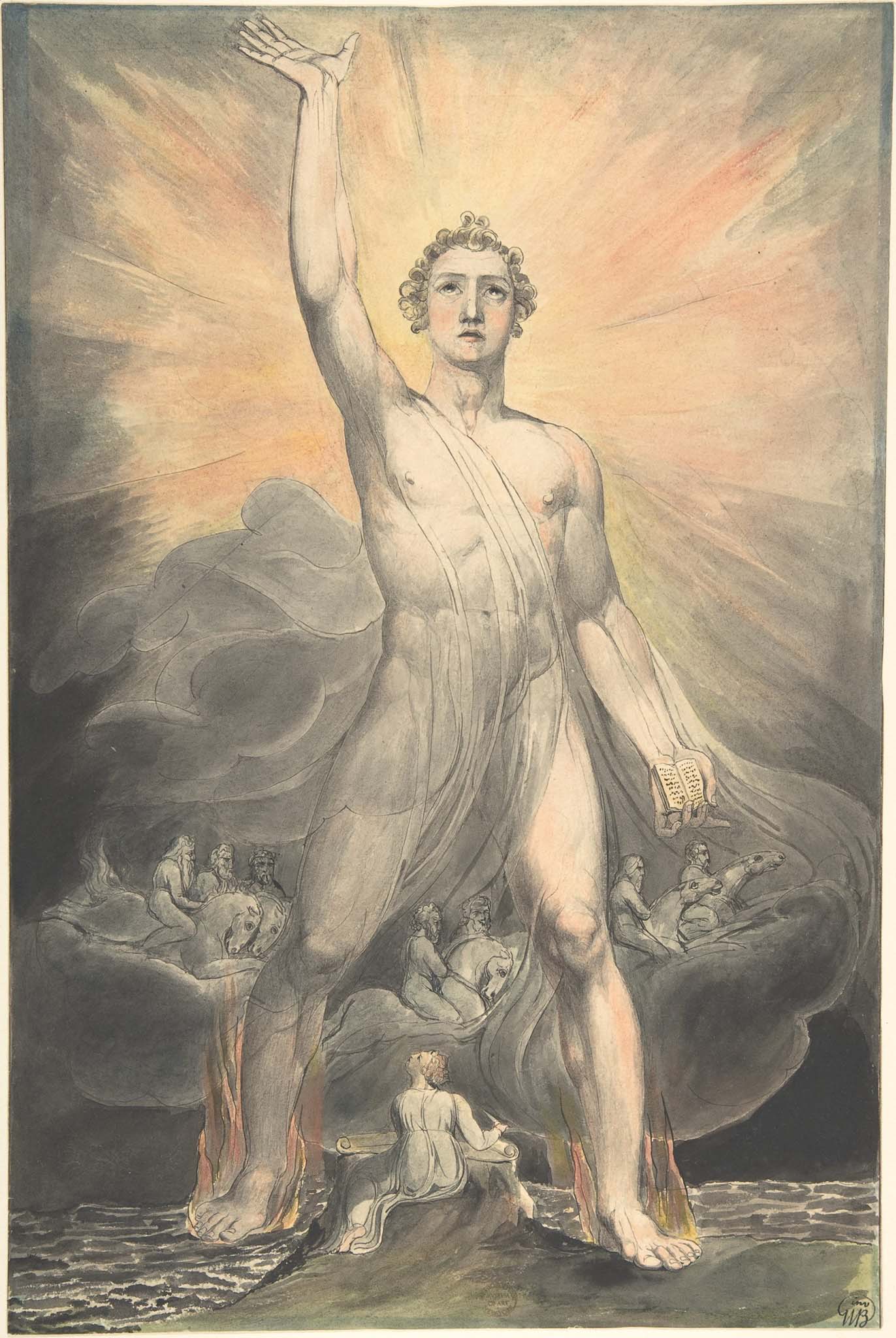
One of the greatest interpretive challenges for modern preterists concerns the Two Witnesses of Revelation 11.
If Revelation 1-19 is primarily about the first century persecution of the Church and the Roman-Jewish War, then who were these two figures?
Were they historical individual figures?
Or are they symbolic?
The text itself doesn’t provide any obvious clues to lead us to the identities of two specific individuals. In fact, the description of the two witnesses only seems to confound the difficulty from preterist literalist perspective. We are given the following descriptions.
They shall prophesy a thousand two hundred and threescore days, clothed in sackcloth (v. 3).
They are the two olive trees and the two candlesticks (v. 4).
Fire comes out of their mouth and devours their enemies (v. 5).
They have the power to cause drought, waters to turn to blood and all sorts of plagues (v. 6).
The beast from the bottomless pit shall make war against them and kill them (v. 7).
Their bodies will lie in the streets of the “Great City,” but after three-and-a-half days, they will be bodily resurrected and will ascend to heaven (vv. 8-12).
Immediately afterward, there will be an earthquake. One-tenth of the city will fall and 7,000 people will be killed (v. 13).
Some preterist works mention that Nero killed his pregnant wife Poppaea and make note that Nero was the Roman emperor during Paul’s stay in Rome from AD 60 to 62. However, no one has advanced the thesis that Nero may have become knowledgeable of the Hebrew Scriptures through either Poppaea or Paul. Evidently, Nero twisted the prophecies of Scripture and deceived himself into thinking that he was the promised Messiah prophesied by Daniel, the king of the world who would rule from Jerusalem.
Here I will pose some counterarguments to the most commonly heard “contrary texts” that supposedly refute postmillennialism. I do not deny that there are difficulties in every eschatological system. The difficulty in reconciling our doctrine with all Scripture is the reason for our differences. However, there are the fewest difficulties with postmillennialism as the objections can be boiled down to a handful of categories. Of course, there are more scriptures than the ones I list here. However, other examples will be similar to the contrary texts I have listed below and a similar counterargument will be sufficient to answer each of these.
At last we will look at Revelation 20 in order to see where the term the “millennium” originated and what is its meaning. In Revelation 20, we see the phrase “thousand years” mentioned by John six times. The words in…
The 20th century has been termed, “The Violent Century,” by some historians, referring to the two great world wars, the holocaust, abortion, Soviet and Chinese communism killing millions of their own people, famines, the AIDS epidemic, etc., all happening on…
Here we will briefly survey the power of Christ’s victorious kingdom in history by looking at the faith and teachings of great saints of old, from Athanasius and Augustine to Jonathan Edwards and Charles Hodge, to the revival of the…
Gustave Doré, Christus Victor or The Triumph of Christianity over Paganism
We continue in our survey of the promises of God in the Bible, bringing forth the light of the New Testament to illuminate and amp…
Editor’s note: I don’t agree with every point of Terry’s analysis, but this is overall an excellent primer on the pseudepigraphal works that influenced Jewish eschatology in the Maccabean and Roman periods. ~ JCR The Apocryphal Apocalypses By Milton S.…
In the debate over the meaning of the Book of Revelation, futurists enjoy telling preterists that only their view takes the text literally. This is, of course, a misnomer since all literature is read literally. We read symbols to be…
Ronald Reagan changed his view as a result of watching The Silent Scream – a movie he considered so powerful and convicting that he screened it at the White House.