
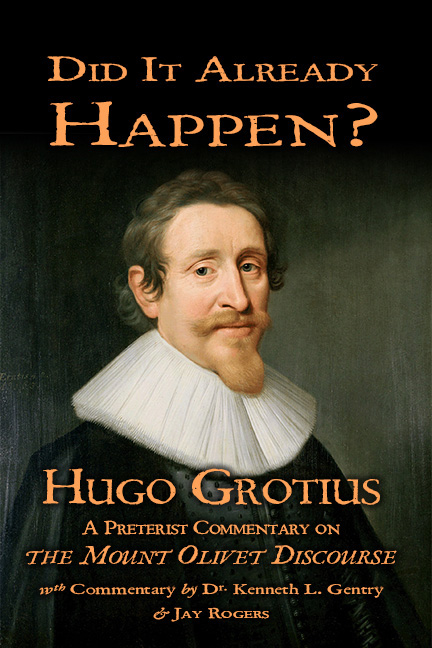
Introduction
How have Christians understood Matthew 24 throughout history?
From the early church to modern evangelicalism, interpretations have shifted dramatically—especially around one controversial phrase:
“This generation will not pass away until all these things take place.” (Matthew 24:34)
This article traces the development of the four major interpretive frameworks and explains how this single verse became the dividing line between them.
Influence of the Early Church
Earlier theologians such as Augustine of Hippo and John Chrysostom:
- Connected Matthew 24:1-34 to the destruction of Jerusalem
- Still affirmed a future second coming
The early church read Matthew 24 as both fulfilled and still awaiting fulfillment.
The Dominant View (500–1500 AD)
Historicism with Preterist Foundations
During the medieval period, the most common approach combined:
- Historicism — prophecy unfolding across church history
- Partial preterism — some events fulfilled in 70 AD
The Church saw itself living inside the prophetic timeline. Wars, plagues, and political upheavals were interpreted as ongoing fulfillments of Matthew 24. The Olivet Discourse was not just about the past or future — it was happening in real time.
Key thinkers like Joachim of Fiore expanded this into large-scale historical frameworks dividing history into prophetic ages.
The Reformation Turning Point (1500–1700)
Protestant Historicism
Reformers like Martin Luther and John Calvin intensified historicist interpretation:
- Prophecy unfolded across centuries
- The Church itself became central to interpretation
Prophecy was no longer distant — it explained present-day religious conflict.
Catholic Counter-Interpretations
In response, two major systems were formalized:
Futurism — associated with Francisco Ribera
Preterism — associated with Luis de Alcázar
These approaches:
- Moved fulfillment either into the distant future
- Or confined it to the early church
For the first time, all major interpretive frameworks existed side by side.
The Rise of Modern Systems (1800–Present)
Dispensational Futurism
John Nelson Darby introduced a structured futurist system:
- End-times timelines
- A future tribulation
- The concept of the rapture
This view spread widely through the Scofield Reference Bible. Matthew 24 became a roadmap for future global events.
The Modern Landscape
Today, all four views coexist:
- Futurist — dominant in many evangelical churches
- Preterist — growing in scholarly and Reformed circles
- Historicist — less common today
- Idealist — symbolic and theological readings
The Key Verse: Matthew 24:34
Why It Matters
This verse determines the entire interpretive framework:
“This generation will not pass away …”
How “generation” is defined shapes everything else.
Interpretations Across History
Preterist
- “Generation” = 1st-century audience
- Fulfillment in 70 AD
Futurist
- “Generation” = future end-times people
Historicist
- “Generation” = long historical era or type
Idealist
- “Generation” = symbolic of humanity
Pulling It Together
Your definition of “this generation” determines your entire view of Matthew 24.
Comparison Table
| View | “This Generation” | Strength | Challenge |
| Preterist | 1st-century people | Simple, literal | Explaining cosmic imagery |
| Futurist | Future generation | Fits global scope | Less natural reading |
| Historicist | Long era/type | Flexible | Less precise |
| Idealist | Symbolic humanity | Theological depth | Not time-specific |
Conclusion
From the early church through the Reformation to today, interpretation of Matthew 24 has continually evolved:
- Early Church → mostly literal, near-term
- Medieval → historicist with layered meaning
- Reformation → competing systems emerge
- Modern era → four distinct frameworks
One verse — Matthew 24:34 — became the fault line of eschatology.
Understanding how it has been interpreted is key to understanding every major end-times view in Christian history.


1 Comment
This is a very concise and well done overall picture of Matthew 24 interpretations. Thanks Jay!